Hey folks, if you’re anyone in flexible packaging—whether you’re a brand owner, converter, or small manufacturer who’s sourced colored CPP film before, you know how vital it is to get the right roll. As a colored CPP film supplier, I’ve seen more than my fair share of production headaches and post-shipment complaints, especially around defects that pop up unexpectedly. A lot of these issues aren’t just “bad luck”—they’re common, preventable, and knowing what to look for can save you tons of rework, downtime, and missed deadlines. Colored CPP Film
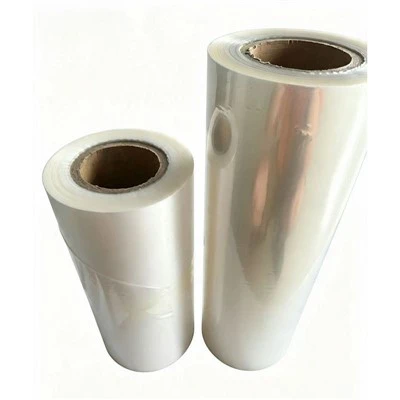
First, let’s break down what colored CPP film even is, for anyone new here: it’s cast polypropylene that’s been pigmented during extrusion, used for everything from food packaging liners to product wraps, label stock, and even some protective covers. The color, clarity, and consistency of the film are non-negotiable for most clients—mess that up, and your whole production line slows to a crawl. Over the years, I’ve narrowed the most frequent defects into six big ones that come up again and again. Let’s dive into each, why they happen, and how we work with clients to avoid them.
The first and most obvious one is uneven color hue (or “color bleeding” for the more stubborn cases). I don’t mean a tiny slight gradient—this is when a roll that’s supposed to be bright, uniform royal blue has splotches of lighter blue near the edge and darker in the middle, or even patches where the pigment is almost gone. Why does this happen? During the extrusion phase, you mix the polypropylene resin with the pigment masterbatch, right? If the masterbatch doesn’t disperse evenly through the extruder, you get what we call “color streaks” or “hue variation.” A lot of cheaper suppliers cut corners here—they use lower-quality masterbatch that doesn’t mix well, or their extruder barrels are worn out so the resin and pigment don’t blend uniformly. We see this all the time with clients who’ve bought bulk rolls from overseas, only to open a pallet and find half the roll is off-color. Another cause? If the film cools too quickly after extrusion (CPP is chilled on a roller to solidify fast), the pigment can’t distribute evenly across the sheet, leading to that blotchy look. We’ve fixed this for clients by adjusting our chill roller temperature and increasing our mix speed for the masterbatch, so that hardly ever happens for us anymore.
Next up, film clarity issues (or “haze”), even in opaque colored film. Wait, you might think opaque colored film shouldn’t have clarity problems, but haze here means the surface or the whole sheet is foggy instead of having that smooth, solid color you expect. For example, a bright red CPP film for candy wrappers should be crisp, not cloudy. Haze usually comes from two places: either the resin has too many impurities, or the pigment particles are too large. If the masterbatch has pigment clumps, those clumps don’t break down during mixing, leaving tiny “cloud spots” in the film. Also, if the film is stretched too much during the cast process (CPP is sometimes oriented slightly to add strength), over-stretching can create tiny micro-crystals that make the film hazy, even if the color is right. I had a client last year who was using hazy film for their product labels, and the print looked washed out—they thought it was their printer, but it was the film. We swapped them to a higher-grade resin and adjusted our stretch ratio, and the haze was gone immediately. That’s the kind of thing that’s easy to miss if you don’t work with film day in and day out.
Third, pinholes and tiny surface voids—these are the worst for food packaging, because they can lead to leaks, contamination, or issues with seal integrity. A pinhole is a tiny, needle-sized hole in the film, usually along the edges or randomly scattered across the roll. Voids are a bit bigger, like small air bubbles trapped inside the film that pop when the film is stretched. Why do these happen? Most often, it’s from moisture in the resin. If you don’t dry the polypropylene pellets before feeding them into the extruder, the moisture turns to steam during heating, and those steam bubbles get trapped in the film, leaving voids and pinholes when the film cools. Another cause: dust or debris in the extrusion line, from worn metal parts in the extruder head or even dirty resin pellets. We have a strict pre-production drying process for all our resin, and we inspect every extruder head weekly to catch any debris—this is one defect we rarely get complaints about, because it’s so fixable if you’re meticulous. I once had a client bring back 10 rolls with pinholes, and we traced it back to their warehouse storing resin in a damp basement—so it’s not just the film manufacturer’s fault, sometimes it’s how the client stores the material too. That’s why we always do a quick run-through of best practices with new clients, to avoid finger-pointing.
Fourth, bad seal strength—this is a big one for packaging converters, because if the film doesn’t seal properly, the product inside can spill or go bad. Colored CPP film is often used for heat-sealed bags, so if the seal is weak, that’s a major flaw. Seal strength issues usually tie back to the surface of the film or the blend of resin. If the outer layer (or sealant layer) isn’t made of the right grade of polypropylene, the heat doesn’t bond properly during sealing. Also, if the film has too much slip agent added to the surface (to make it easy to unwind from the roll), that slip agent can migrate to the seal area and prevent adhesion. We test every batch of film for seal strength at 150°C and 180°C, because different clients use different sealing temperatures—no more guessing. I’ve seen clients cut costs by adding too much slip agent to their film, and then their seal machines can’t close the bags tight—we adjust the slip agent ratio per client’s needs, so that never happens.
Fifth, edge waviness and curling—this is the kind of defect that makes the film roll look warped, so when you’re unwinding it on a machine, it doesn’t lay flat, causing jams and wasted material. Edge waviness is when the sides of the roll are uneven, like a crumpled piece of paper, and curling is when the whole roll twists to one side. Why does this happen? CPP film is a biaxial or uniaxial oriented film, meaning it’s stretched in one direction to add strength. If the stretch isn’t evenly distributed across the width of the film, the different sides shrink at different rates, leading to curling or waviness. Also, if the chill roller (the one that cools the film) isn’t perfectly flat or at a consistent temperature across its surface, the edges cool faster than the middle, causing uneven shrinkage. We calibrate our chill roller every month to make sure the temperature is uniform, and we adjust our stretch rate based on film width—so our rolls come straight, no warping. A lot of smaller suppliers skip this calibration, which is why their film has edge issues. I once had a client who was wasting 20% of their material on jams because of wavy edges, and after we switched to our film, their waste dropped to less than 2%—that’s a huge saving for them.
Last but not least, color fade or rub-off—this is a problem when the pigment isn’t bonded properly to the film, so it smudges off during printing, unwinding, or even handling the final product. For example, a colored film for a retail product might rub off onto a store shelf, making the product look cheap. This is different from hue variation—this is actual pigment transfer. The cause here is usually a poor bonding agent between the resin and pigment, or the film surface is too smooth. If you use a pigment that doesn’t have good adhesion to polypropylene, it will rub off. Also, if you don’t treat the film’s surface with a corona treatment (a quick electrical treatment to make it more receptive to inks and pigments), the pigment won’t stick. We do a standard corona treatment for all our colored CPP film, and we test rub-off by rubbing a white cloth against the film—if any color comes off, the batch gets reworked. A lot of suppliers skip corona treatment to cut costs, and that’s why their color rubs off. I had a food packaging client last year whose product was getting rejected by a grocery chain because the color was rubbing off on the packaging machines, and we fixed that in one batch by adding extra corona treatment time.
Now, I know what some of you are thinking: “All suppliers say they avoid these defects.” But as someone who’s actually on the production floor, not just in an office quoting prices, we’ve built our process around catching these defects early. We do 100% in-line testing for every roll—we check color uniformity, film thickness, pinholes, and seal strength as the film is being extruded, not just after it’s wrapped. We also offer custom testing for clients who have specific needs, like if you’re using the film for cold storage or high-temperature packaging, we adjust the resin blend to match.

At the end of the day, colored CPP film defects aren’t just “manufacturing mistakes”—they’re avoidable with the right equipment, process checks, and attention to what your client actually needs. If you’ve dealt with any of these issues before—splotchy color, hazy film, pinholes ruining your production—let’s talk. We can walk through your specific use case, test a small sample batch, and make sure you get film that works for your line, no surprises.
Standard Cast Polypropylene Film references:
- "Defect Analysis in Cast Polypropylene (CPP) Films" – Journal of Plastic Film & Sheeting, Vol. 32, No. 4, 2016
- "Pigment Dispersion in Polymeric Films: Common Causes of Color Non-Uniformity" – Society of Plastics Engineers (SPE) Annual Technical Conference, 2018
- "Seal Strength Considerations for Flexible Packaging Films" – Flexible Packaging Association (FPA) Technical Bulletin, 2020
- "Surface Defects in Extruded Polyolefin Films" – International Journal of Advanced Manufacturing Technology, Vol. 95, No. 1-4, 2018
Qingzhou Huiyuan Packaging Materials Co., Ltd.
As one of the most professional colored cpp film suppliers in China since 1997, we’re featured by quality products and good service. Please feel free to buy cheap colored cpp film made in China here from our factory. For price consultation, contact us.
Address: Naoshan Industrial Park, Shaozhuang Town, Qingzhou City, Weifang, Shandong Province, China.
E-mail: 15864598133@163.com
WebSite: https://www.huiyuanfilms.com/
