If you’ve ever stepped into a bakery—whether a small neighborhood spot or a bustling commercial production facility—you might not notice the quiet workhorses keeping operations running smoothly. As a supplier of bakery auxiliary equipment, I’ve spent years talking to bakers, head chefs, and production managers who tell me that the right tools don’t just speed up work; they turn inconsistent, stressful baking into predictable, scalable, and even enjoyable craft. Too often, new bakers focus on ovens or mixers (the “star” machines) and overlook the auxiliary equipment that bridges gaps, reduces waste, and protects both product quality and staff safety. Let’s break down exactly what auxiliary equipment is non-negotiable for any bakery operation, organized by the stage of the baking process where they make the most difference. Auxiliary Equipments

First, let’s start with prep stage essentials, where small inefficiencies can snowball into big delays or off-tasting product. For any bakery, dough preparation is foundational, and auxiliary equipment here doesn’t just assist—it prevents errors that ruin batches. First on the list: dough dividers and rounders. If you’ve ever watched a baker hand-cut proofed dough, you know how quickly portion sizes become inconsistent, leading to uneven baking or unhappy customers who notice a 2-oz roll is way smaller than a 3-oz one. Modern dividers aren’t just for commercial bakeries; even artisanal shops with 50 to 100 loaves a day benefit from countertop models that portion dough to within 1 gram of accuracy, then roll it into uniform rounds for proofing. I recently worked with a small bakery in Portland that used to spend 2 hours hand-dividing sourdough loaves; after investing in a compact divider, that time dropped to 20 minutes, and they cut dough waste by 12% because they stopped trimming uneven pieces.
Next, dough sheeters. Think of sheeters as the baker’s tool for perfect laminating—essential for croissants, puff pastries, or laminated brioche. Laminating requires folding butter into dough evenly, which hand-rolling can’t replicate consistently. Sheeters come in different widths: 12-inch models for small-scale pastries, 30-inch for commercial bread lines, and even tabletop versions for home bakers turned small business owners. A common mistake I see is bakers buying a sheeter that’s too small for their needs; if you’re making croissants for 50 people a day, a 12-inch model works, but if you’re supplying a local café with 200, you need something that can handle larger batches without tearing the dough. Also, don’t overlook dough docker tools—those small spiked rollers that perforate flatbreads, pizza crusts, or crackers to prevent air bubbles from forming while baking. It’s a tiny tool, but it’s the difference between a crispy, flat pizza crust and a bubbly, misshapen one.
Once prep is done, proofing is a stage that’s often under-equipped, but it’s where dough gets its final rise, and temperature/humidity control makes all the difference. Proofing cabinets, not to be confused with basic refrigerators, are auxiliary machines that maintain a consistent 80–90°F (27–32°C) and 75–85% humidity—conditions that let yeast work at its optimal pace. Without a dedicated proofing cabinet, bakers might stick dough on trays in a warm corner, but ambient temperature can vary by 5 or 10 degrees, leading to uneven rises or dough that’s too cold and takes twice as long to proof. For bakeries making multiple dough types (sourdough, brioche, whole wheat), some proofing cabinets have adjustable zones so you can proof different batches at the same time without cross-contaminating flavors. I had a client in Chicago who ran out of proof space during holiday weekends; adding a second tier to their proofing cabinet let them handle 30% more loaves without expanding their kitchen footprint. Also, proofing racks are auxiliary equipment that go hand-in-hand with cabinets—sturdy, NSF-certified racks that hold multiple trays, allowing air to circulate evenly around each dough piece. Cheap, flimsy racks bend under the weight of hot trays or get sticky with dough residue, so investing in heavy-duty, easy-to-clean racks pays off in longevity.
Now, moving to the baking stage, auxiliary equipment here protects your ovens and ensures consistent product, whether you’re baking small pastries or large loaves. First, oven thermometers and probes. Most commercial ovens have built-in thermostats that are often off by 25–50°F (14–28°C)—a common issue I hear from bakers who throw away batches because their oven said it was 350°F, but it was actually 300°F. Digital oven probes, which can be left in loaves or pastries during baking, let you track internal temperature instead of just surface heat, which is critical for bread (needs 190–210°F internal) and pastries (needs 165°F minimum for food safety). For bakeries making multiple products, oven screens or baking mats are another essential. Silicone baking mats are reusable, cut down on parchment paper waste, and prevent sticking better than parchment for high-sugar items like cookies or sticky buns. For deck ovens (common for artisanal bread), baking stones or pizza stones are auxiliary equipment that transfer heat evenly to the bottom of loaves, preventing soggy bottoms. I’ve seen bakers use cheap stones that crack after a few uses—look for cordierite stones, which are designed to withstand rapid temperature changes and last for years.
Then, there’s the often-overlooked stage of post-baking: cooling and finishing. Cooling racks aren’t just a way to set loaves; they’re critical for food safety. If you put warm bread in a sealed container, condensation builds up, making the bread soggy and creating mold risks. Heavy-duty wire cooling racks, spaced to let air circulate all around each loaf, let bread cool evenly in under an hour instead of 4, which means you can move to the next step faster. For decorating, auxiliary equipment like pastry bags and tips are a given, but specialty tools like cake turntables, piping guns for large quantities of frosting, and even chocolate tempering machines (if you make dipped pastries or candies) are non-negotiable for consistent finishing. Chocolate tempering is especially important—if you melt chocolate on the stovetop, you’ll get dull, streaky results that don’t set properly, but a tempering machine controls temperature to 88–90°F for dark chocolate, resulting in a glossy, smooth finish that customers associate with quality. I worked with a cookie bakery in Atlanta that used to dip chocolate by hand and threw away 15% of batches because they were dull; after adding a small tempering machine, that waste dropped to 2%, and their sales of dipped cookies increased 20% because the product looked and tasted better.
Also, don’t forget safety and sanitation auxiliary equipment, which is mandatory for any bakery operating in a food service environment. First, hand washing stations with foot pedals or automatic sensors—bakers need to wash hands constantly, and manual handles can spread bacteria. Then, food storage containers: airtight, NSF-certified containers for flour, sugar, and yeast, which keep pests out and prevent ingredients from absorbing moisture (ruining flour, for example, which can get clumpy if it’s exposed to humidity). Waste disposal equipment, like commercial compost bins (for food waste) and grease traps (for oven and mixer cleaning), help bakeries meet local health codes and reduce waste, which is a big concern for customers who prioritize sustainable businesses. For bakeries with staff doing heavy lifting, adjustable worktables with stainless steel tops are auxiliary equipment that prevent back injuries and provide a clean, flat surface for prep work. Too many small bakeries use old, wobbly tables that are hard to clean, leading to cross-contamination risks—investing in a durable worktable is a safety measure as much as a productivity measure.
Now, let’s talk about scalability, because what works for a small bakery might not work for a growing one. If you’re just starting out, countertop versions of dividers, proofing cabinets, and sheeters are enough, but as you expand to 500+ loaves a day, you’ll need larger, more automated auxiliary equipment. For example, dough handlers that move trays of proofed dough to ovens automatically cut down on staff time and reduce the risk of dropping trays (a common workplace injury in busy bakeries). Also, batch counters, which track how many loaves or pastries are produced each shift, help with inventory and ordering ingredients—no more running out of flour halfway through a shift because you didn’t track how many loaves you needed. One mistake I see growing bakeries make is buying equipment that’s too automated too soon; if you’re still perfecting your sourdough recipe, a fully automated line might take away the craft that makes your bakery unique. Auxiliary equipment should support your process, not override it—look for models that are easy to adjust, so you can tweak portion sizes or proofing times as your recipes evolve.
Another key point: maintenance and after-sales support. When you invest in auxiliary equipment, you want it to last, so look for suppliers who offer installation, training, and repair services. For example, if you buy a dough sheeter from a supplier who doesn’t service your area, you could be stuck waiting weeks for a repair, halting production. As someone in this industry, I always tell bakers to prioritize suppliers who work with their schedule, offer flexible payment plans, and provide replacement parts—because a broken divider isn’t just an inconvenience, it’s lost revenue. I had a client in Denver who bought a cheap sheeter from an online retailer; when a roller broke, the supplier didn’t have a replacement for 6 weeks, and they lost $12,000 in sales during that time. That’s why choosing the right auxiliary equipment isn’t just about the machine—it’s about the support that comes with it.
Wait, let’s also address common myths. Some bakers think that auxiliary equipment is only for large commercial bakeries, but that’s not true. A small bakery with 2 people and 50 loaves a day can benefit from a compact divider, a basic tempering machine, and a quality proofing cabinet. I recently worked with a husband-and-wife bakery in Austin that started out using a hand mixer and baking on a single home oven; within a year, they were selling to 5 local cafes, and investing in a small proofing cabinet and dough divider let them keep up with demand without hiring more staff. The myth that auxiliary equipment is too expensive ignores the fact that the cost of wasted dough, lost sales, and inconsistent product is far higher.
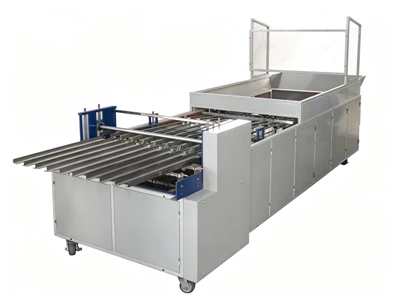
Now, to wrap this up: bakery auxiliary equipment isn’t just a list of tools—it’s a system that connects every stage from prep to finishing, supporting quality, safety, and scalability. Whether you’re a new bakery just starting out or an established one looking to grow, the right auxiliary equipment will streamline your process, reduce waste, and help you deliver consistent, delicious products that keep customers coming back. If you’re ready to upgrade your bakery’s auxiliary equipment, or have questions about what’s right for your specific operation, don’t hesitate to reach out for a consultation. We can assess your current workflow, recommend equipment that fits your budget and production needs, and provide the support to keep your bakery running smoothly.
Three Station Thermoforming Machine References
- National Restaurant Association. (2022). Commercial Bakery Operations: Safety, Sanitation, and Equipment Best Practices.
- Bakery Science & Technology Association. (2021). Auxiliary Equipment Impact on Artisanal and Commercial Bakery Productivity.
- U.S. Food and Drug Administration (FDA). (2020). Food Service Equipment Guidelines for Bakeries.
- Small Business Administration (SBA). (2023). Scaling a Small Bakery: Equipment and Workflow Optimization.
Zhejiang Sayeah Machinery Co., Ltd.
Zhejiang Sayeah Machinery Co., Ltd. is one of the most reliable manufacturers and suppliers of auxiliary equipments in China, also supports high quality customized service. Please feel free to buy CE approved auxiliary equipments from our factory. For price consultation, contact us.
Address: Wanquan District Industrial Zone,West Of China National Highway 104, Sunlou Village, Wanquan Town, Pingyang County, Zhejiang Province. China
E-mail: sales@sayeahmachinery.com
WebSite: https://www.sayeahthermoforming.com/
