As someone who’s spent the last decade working directly with industrial clients and troubleshooting their most pressing equipment questions, I hear a lot of myths about explosion proof motors. One of the most common I get asked—sometimes three times a week, from small fab shops to mid-sized chemical plants—is: “Are explosion proof motors even available in single phase?” For years, the answer was a complicated “sort of, but only for very specific uses.” Today, that’s changed, and it’s a shift that’s revolutionized how smaller operations approach hazardous area compliance. Let’s break this down honestly, no industry jargon fluff, and no sales pitches that ignore the real tradeoffs that come with single-phase explosion proof motors. Explosion Proof Motor
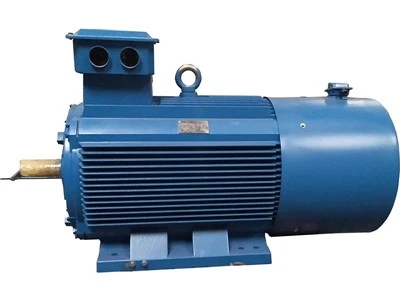
First, let’s ground this in what makes a motor “explosion proof” in the first place. When OSHA, NEC, and IEC talk about explosion proof (or “ex”) motors, they’re not describing a motor that can survive an explosion. They’re referring to a motor built to contain any internal spark or overheat event (from a faulty winding, locked rotor, or overload) so completely that it can’t ignite flammable gases, dust, or fibers that are present in the surrounding environment. For three-phase ex motors, this has been standard for decades—they’re workhorses in oil refineries, grain elevators, and chemical processing plants. But single-phase motors are a different animal. Single-phase power is the standard for residential, small commercial, and many light industrial spaces (think small warehouses, farm equipment, or bottling lines) that don’t have access to three-phase power. For a long time, the only single-phase motors you could get for hazardous areas were limited, low-power models with serious restrictions on use.
That’s no longer the case. In the last five years, we’ve invested in modifying our in-house testing and manufacturing lines to roll out full-rated single-phase explosion proof motors, available from 1/4 hp up to 20 hp, which covers 90% of the requests we get from small to mid-sized hazardous operations. But before you jump to place an order, let’s talk about what makes these motors unique, and where they’re not a fit. Unlike three-phase ex motors, which have balanced power across three windings and more consistent torque, single-phase motors rely on a start capacitor or run capacitor to kick the rotor into motion. That capacitor is a critical component—if it fails, the motor can overheat, and that’s exactly the kind of fault event we have to contain. So every single one of our single-phase ex motors is built with three key design features that set them apart from standard single-phase industrial motors.
First, we reinforced the motor’s enclosure to meet NEC Class I, Division 1 and IEC Ex d standards. Division 1 areas are the ones where flammable materials are present 24/7, like inside a grain elevator’s processing bin or a small paint mixing room. The enclosure is made from cast aluminum, with gasketing that’s machined to a tolerance of 0.002 inches—small enough to stop any internal flame or hot gas from escaping, even during a locked rotor test where the motor is deliberately run until its windings overheat. That’s non-negotiable; we’ve seen too many unmodified single-phase motors fail compliance tests because their enclosures were too thin to contain a fault. Second, we integrated overheat protection that’s both internal and external. Standard single-phase motors have thermal overloads, but for ex use, we added a NEMA-rated thermistor embedded in the winding that trips the motor power before the temperature gets high enough to ignite surrounding material. Third, we tested every unit for capacitor durability. Unlike standard motors, where a failing capacitor is just an inconvenience, a capacitor failure in an ex motor is a safety hazard. So we use capacitor banks rated for 100,000 cycles, and include a visual indicator on the motor’s terminal box to let maintenance teams know at a glance if the capacitor is on its way out.
Now, let’s address the question most clients ask next: “Why didn’t I hear about these before?” A few factors kept single-phase ex motors niche for so long. First, power ratings. Early single-phase ex motors topped out at 5 hp, which was fine for small pumps or fans, but too small for many tasks. The new models we manufacture go up to 20 hp, which matches the power output of three-phase models in the same line, so they can handle everything from conveyor systems to small mixers. Second, cost. For years, single-phase ex motors cost 30-40% more than equivalent three-phase models, because the manufacturing and testing was lower volume. As demand grew, that gap closed—today, our single-phase ex motors are only 10-15% more expensive than three-phase models of the same power, which is a far smaller premium than it used to be. Third, misconceptions about performance. Single-phase motors have lower power factor and slightly less starting torque than three-phase, but for most small hazardous area applications, that’s not a problem. We recommend them for applications where three-phase power isn’t available, or where retrofitting a system is prohibitively expensive. For example, a customer in the Midwest last year had a small grain drying operation that was classified as Class II, Division 2 (for combustible dust)—they didn’t have three-phase power on the farm, so they couldn’t use a standard three-phase ex motor. Our 10 hp single-phase ex motor was a perfect fit; it powered their conveyor belt and fan, met OSHA compliance, and cost them half the price of upgrading their entire electrical panel to three-phase.
That said, it’s not all good news. There are still limitations to single-phase explosion proof motors, and it’s important to be transparent about those. First, they’re not rated for Division 1 areas with extremely high power demands. Our 20 hp model is rated for most Division 1 spaces, but for applications like large refrigeration compressors or heavy conveyor systems that need 25 hp or more, three-phase is still the only reliable option. Second, maintenance is slightly different. Single-phase motors rely on capacitors, so maintenance teams need to inspect those capacitors every 6 months, compared to every 2 years for three-phase motors. It’s a small extra step, but one that’s easy to miss if you’re used to working with three-phase equipment. Third, they’re not as widely available off-the-shelf as three-phase models. While we carry 10 stock single-phase models, for custom orders (like special mounting configurations or variable speed controls) we need a 4-6 week lead time, compared to 1-2 weeks for three-phase custom orders.
I’ve had clients come to me expecting single-phase ex motors to be a silver bullet, and I’m upfront when they’re not. For example, a small chemical plant in Texas reached out last year, looking for a 30 hp single-phase ex motor to power a mixing tank in their lab. Their space was Class I, Division 2, which is non-hazardous most of the time but has occasional exposure to flammable fumes. The 20 hp single-phase ex motor could have worked, but the 30 hp demand meant they’d be running the motor at 70% load, which would have shortened its lifespan and increased the risk of overheating. Instead, we worked with their electrical contractor to upgrade their lab’s panel to a small three-phase feed, and we installed a standard three-phase ex motor. They saved money on maintenance long-term, and the motor has run without issues for 18 months. That’s the kind of advice I pride myself on giving—no pushing a product that’s not right for the job, just honest solutions for hazardous area equipment.
Another common question: “Are there different types of single-phase explosion proof motors?” The short answer is yes, and not all are created equal. There are two main types: capacitor-start, capacitor-run (CSCR) motors, which are the most common for ex use, and permanent split capacitor (PSC) motors. PSC motors are more efficient, but they have lower starting torque, so they’re only good for low-load applications like fans or small pumps. CSCR motors, which is what we manufacture, have high starting torque and can handle heavy loads, making them suitable for most industrial applications. We don’t offer PSC single-phase ex motors because they’re not reliable for our client base; we focus on the CSCR models that meet safety standards and stand up to daily use in hazardous environments.
Let’s also talk about compliance, because that’s the reason every client is asking this question in the first place. OSHA, NEC, IEC—all of the major safety bodies now recognize single-phase explosion proof motors as compliant with their standards, as long as they’re properly listed. A lot of older guides still only reference three-phase motors, but the 2021 NEC update explicitly added single-phase motors to the explosion proof requirements for Class I and Class II areas, as long as they’re tested and listed for that use. That’s a huge milestone; before 2021, many electrical inspectors wouldn’t approve a single-phase ex motor, but now it’s standard. We work with third-party testing labs to have every one of our single-phase models UL-listed and CSA-certified, so our clients don’t have to worry about failed inspections.
For anyone still on the fence, let’s break down a real use case that’s representative of what we see every day. Last year, a small woodworking shop in the Pacific Northwest reached out. Their facility was classified as Class II, Division 2, because of sawdust buildup—a Class III hazardous area, per NEC, since wood dust is combustible. They had a 5 hp single-phase motor powering their dust collection system, which was a standard industrial motor, not explosion proof. OSHA had come through for an inspection and flagged it, threatening fines of up to $15,000 per violation. They couldn’t afford to rewire their entire shop for three-phase power, which would have cost over $20,000. We offered our 5 hp UL-listed single-phase explosion proof motor, which was priced at $1,200, compared to $25,000 for the rewiring. It took two days to install, and they passed their follow-up inspection with no issues. That’s the impact single-phase ex motors can have for smaller operations that don’t have the budget for large electrical upgrades.
Of course, there are still gaps in the market, and that’s why we’re continuing to invest in single-phase ex motor technology. Right now, we’re working on variable speed control (VSD) single-phase ex motors, which will allow clients to adjust motor speed for applications like conveyors or mixers that need variable power. Currently, VSDs for ex use are only available in three-phase, so that’s a gap we’re targeting to fill in 2025. We’re also working on higher-power models, up to 30 hp, to cover the remaining small subset of clients who need more power but can’t get three-phase.
At the end of the day, the question “Are explosion proof motors available in single phase?” isn’t a yes or no answer anymore. It’s a yes, but with clear limits, and it’s only useful for the right applications. I’ve spent 10 years in this business, and I’ve learned that the best solutions aren’t always the most expensive or the most powerful—they’re the solutions that fit the client’s specific needs, whether that’s a small single-phase motor for a farm operation or a large three-phase motor for a refinery.
If you’re working in a hazardous area, whether it’s a small shop or a mid-sized industrial site, and you’re looking for explosion proof motors, single phase or three phase, we’re here to help. We don’t just sell motors—we’ve worked with thousands of clients to troubleshoot compliance issues, recommend the right equipment, and make sure their operations stay safe. Don’t hesitate to reach out to discuss your specific application, whether you’re looking for a standard off-the-shelf model or a custom solution tailored to your space. No sales pitches, no hidden fees, just honest advice from people who know explosion proof motors inside and out.
Large Synchronous Motor References:
- National Electrical Code (NEC), Article 500 – Hazardous (Classified) Locations, National Fire Protection Association, 2021.
- OSHA Technical Manual, Section IV, Chapter 6: Hazardous Locations, Occupational Safety and Health Administration, U.S. Department of Labor, 2022.
- IEC 60079-1: Explosive atmospheres – Part 1: Equipment protection by flameproof enclosures “d”, International Electrotechnical Commission, 2020.
- UL 1004-1: Standard for Safety for Rotating Electric Machines – Part 1: General Requirements, Underwriters Laboratories Inc., 2021.
- CSA C22.2 No. 13: Industrial Control and Safety Equipment – Part 1: General Requirements, Canadian Standards Association, 2022.
Xian Putai Electric Motor Equipment Co., Ltd.
Putai Electric Motor Equipment Co., Ltd. is one of the most professional explosion proof motor manufacturers and suppliers in China, also supports customized service with low price. Welcome to buy advanced explosion proof motor in stock here from our factory. If you have any enquiry about quotation, please feel free to email us.
Address: No.188 Liuhe Road Yangzhou Jiangsu Province, China
E-mail: sales@putaimotor.com
WebSite: https://www.putaimotor.com/
