If you’ve ever felt that your HVAC system is working overtime but still leaving rooms stuffy, or noticed uneven airflow through your ductwork, you might have come across the term “inline duct fan.” As a duct fan supplier, I get questions about these units all the time—most people have a vague idea they help with ventilation, but few understand how they fit into the bigger HVAC puzzle, and why they might be the missing piece in your home or commercial space. Let’s break this down clearly, no confusing jargon, just real-world context from someone who’s worked with these fans for years. Duct Fan
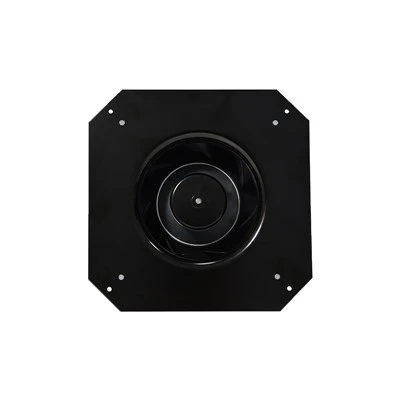
First, let’s set the scene. Your central HVAC system has a main blower that pushes air through your ductwork, right? But duct networks aren’t one-size-fits-all. In many buildings—especially older homes, large commercial spaces, or rooms with high ceilings like offices, gyms, or finished basements—the main blower can’t move air far enough or evenly enough to reach every corner. Long, narrow duct runs, turns, or multiple branches create friction that slows air down, and that’s where an inline duct fan comes in. It’s not a replacement for your main HVAC blower; it’s an add-on designed to boost airflow within specific sections of your duct system, acting like a power booster for targeted areas.
Now, let’s talk about the science behind how inline duct fans work, because it’s not just “blowing air faster.” These fans are called “inline” because they’re mounted directly into the duct, usually in a straight run, not hanging off the side like the small exhaust fans in your bathroom. Inside, they have a cylindrical design with an impeller (the spinning part that moves air) aligned with the duct’s path, which means they don’t disrupt airflow—they actually streamline it. This design also makes them quieter than other types of fans, because the noise is contained within the ductwork rather than escaping into the room. Unlike window fans or portable box fans, inline duct fans are sealed to prevent air leaks, which is crucial for HVAC efficiency—leaking air means your system is working harder than it needs to, wasting energy and money.
There are a few key types of inline duct fans you’ll encounter, depending on your needs. The two most common are centrifugal and axial inline fans. Axial fans are the more traditional, propeller-style units, similar to a jet engine fan. They move a lot of air at low static pressure, which means they’re great for short, straight duct runs where the only obstacle is length—like a bathroom duct running straight through an attic. Centrifugal fans, on the other hand, have a wheel that spins air outward, creating higher static pressure. That makes them perfect for longer duct runs, multiple 90-degree turns, or areas with high resistance—like a commercial space with ductwork that snakes through multiple floors or a home where the main duct has to reach a finished basement two stories below. As a supplier, we work with both types because one size doesn’t fit all; a centrifugal fan would be overkill for a small bathroom, and an axial fan would struggle to push air to a far-off bedroom.
So, when do you actually need an inline duct fan? Let’s list the most common scenarios, because installing one unnecessarily can actually disrupt your HVAC’s balance. First, uneven heating or cooling: if your upstairs is always too hot in summer or too cold in winter, even when you adjust the thermostat, that’s a sign airflow is getting stuck somewhere. Second, stuffy rooms with no obvious issue: a bedroom that never feels fresh, even when your HVAC is running, might be suffering from poor duct airflow. Third, high-occupancy spaces: offices, conference rooms, or gyms with lots of people generate extra moisture and CO2, and your regular HVAC might not exchange air fast enough. Fourth, air quality improvements: if you’re using an air purifier or heat recovery ventilator (HRV) that’s connected to your ductwork, an inline fan can help push filtered or fresh air through the system instead of letting it get trapped near the unit. Also, if you’ve finished a basement and added ductwork to it, that space is a prime candidate—basements often have lower pressure, so air won’t flow there naturally without a boost.
Now, let’s clear up a common myth: inline duct fans don’t fix every HVAC problem. If your main blower is old and weak, or your ducts are leaky or clogged with dust and debris, a booster fan won’t solve that. In fact, pushing more air through clogged ducts can cause strain on your entire system. That’s why it’s important to have a professional inspect your ductwork and main blower before adding an inline fan—we always recommend that, because as a supplier, we want customers to get the right solution, not a band-aid that causes more issues. A good rule of thumb: if your main blower is working at 80% or more to reach distant rooms, an inline fan can take the extra load off, extending the life of your HVAC system.
Another big benefit people overlook is energy efficiency. It might sound counterintuitive, but adding a properly sized inline duct fan can actually lower your utility bills. When your main HVAC blower doesn’t have to push air through long, resistant duct runs, it uses less electricity. Think of it like pushing a heavy shopping cart through a crowded store: if someone gives you a small boost halfway through, you don’t have to use as much force to get to the checkout. The same goes for HVAC systems. Some modern inline fans even have variable speed controls, so they adjust their output based on how much air you need, instead of running at full blast 24/7. That means you get the airflow you want without wasting energy.
Installation matters a lot, too, and that’s a question I get constantly. Inline duct fans can be installed in supply ducts (to push conditioned air to rooms) or return ducts (to pull stale air back to the HVAC unit). Supply side installation is more common for boosting air to distant rooms, while return side is often used for improving ventilation in high-traffic areas. Most homeowners hire an HVAC technician to install them, and for good reason—you have to make sure the fan is the right size for your duct diameter, mounted correctly to avoid vibration, and wired properly for safety. As a supplier, we provide installation guides, but we always advise customers to work with a pro to avoid mistakes like wrong sizing, which can make the fan too loud or ineffective. You also have to make sure the fan is compatible with your HVAC’s existing controls, so it turns on and off when your system does.
Let’s talk about size, because picking the wrong size is one of the biggest mistakes we see. Inline duct fans are measured in CFM (cubic feet per minute)—that’s the volume of air they move. The right CFM for your space depends on the size of the room, the length of your duct run, and how many turns your duct has. For example, a 1,000 CFM fan might work for a large commercial office, but a 100 CFM fan is enough for a small bathroom. We always help customers calculate their required CFM if they’re not sure—there’s no “one size fits all” when it comes to these fans, and installing an undersized fan won’t make a difference, while an oversized fan will be too loud and waste energy.
Maintenance is another point to cover, because an inline fan is like any other mechanical device—it needs regular upkeep to work well. Since it’s inside the duct, dust and debris can build up on the impeller over time, which slows it down and makes it less efficient. Every year, you should have your HVAC system inspected, which includes checking the inline fan for debris, and lubricating the motor if needed. If you have a variable speed fan, you might also want to check the control settings periodically to make sure they’re still matching your needs. A well-maintained inline fan can last 10 to 15 years, which is a solid investment for your HVAC system.
Now, let’s connect this back to what we do as a duct fan supplier. We don’t just sell fans—we help customers figure out which one fits their specific space. Whether you’re a homeowner struggling with a stuffy basement, a commercial property manager dealing with uneven airflow in a 10,000-square-foot office, or a contractor working on a new build, we can guide you to the right inline duct fan. We’ve seen too many customers buy a cheap, generic fan online and end up with something too loud, too small, or not compatible with their ductwork— that’s why we prioritize quality and fit over low price. Our inline fans are designed for durability, quiet operation, and efficient airflow, so you get a solution that works for years, not just a few months.

If you’re wondering whether an inline duct fan is right for your HVAC setup, the best step is to reach out. Maybe you’ve noticed that your utility bills are going up, or that some rooms are always too cold no matter what the thermostat says, or that you’re dealing with persistent stuffiness even after changing your air filters. These are all signs that your ductwork needs a boost, and an inline duct fan could be the solution you’ve been looking for. Don’t guess at the right size or type—let’s talk through your space, your needs, and how an inline duct fan can improve your HVAC’s performance. We’re here to answer any questions, walk you through the options, and help you find the perfect fit.
Plug Fan References
- ASHRAE Handbook: HVAC Applications, American Society of Heating, Refrigerating and Air-Conditioning Engineers, 2023.
- Duct Design Manual, Sheet Metal and Air Conditioning Contractors’ National Association (SMACNA), 2020.
- Energy Efficiency Guidelines for Residential HVAC Systems, U.S. Department of Energy, 2022.
- Inline Duct Fan Installation Best Practices, Air Movement and Control Association (AMCA), 2021.
PBM Motor and Fan (Suzhou) Co., Ltd.
PBM Motor and Fan (Suzhou) Co., Ltd. is one of the most professional duct fan manufacturers and suppliers in China, featured by quality products and good price. Please rest assured to buy customized duct fan made in China here from our factory. Welcome to contact us for quotation.
Address: No.8 Zhu Street, Weiting Town, Suzhou Industrial Park China 215121
E-mail: sales@pbmmf.com
WebSite: https://www.pbmmf.com/
