If you’ve ever walked past a skyscraper going up, a bridge pier taking shape, or a rural foundation being poured in record time, you’ve probably wondered how those wet slabs of concrete get exactly where they need to be — thousands of feet in the air, across gaping construction sites, or even through narrow city streets where a dump truck can’t fit. As the owner of a concrete pump supplier that’s been operating in the Midwest for over a decade, I get at least a dozen calls a week from construction managers, general contractors, and even residential builders asking the same question: how far can a concrete pump actually reach? The answer isn’t a simple number, and it’s not one-size-fits-all, but understanding the science, the equipment, and the real-world factors that shape reach will help you plan every job, big or small, without the headache of last-minute delays or wasted material. Concrete Pump
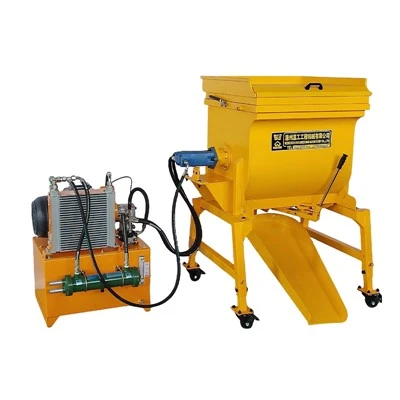
First, let’s break down the two main types of concrete pumps, because that’s the biggest starting point for determining reach. The most common on job sites today are truck-mounted concrete pumps — the ones with the long, articulated, crane-like arms that fold up onto the back of a semi truck chassis. Then there are stationary line pumps, which are usually towed behind a work truck and use heavy steel or rubber hoses to move concrete. Each has its own set of reach limits, and both are designed for very different jobs.
Truck-mounted pumps, in my experience, are the workhorses for most commercial and high-end residential construction. The arms on these pumps are made of multiple sections, usually 3 to 6, that fold into various shapes (Z-fold, L-fold, or roll-and-fold) so they can maneuver around obstacles like existing buildings, power lines, or other equipment on site. The length of the arm is measured in meters, and modern truck pumps range from as short as 20 meters (65 feet) for small residential jobs all the way up to 70 meters (230 feet) or more for supertall construction. I remember working on a 60-story mixed-use tower in downtown Chicago a few years back — we used a 68-meter pump that could reach the 62nd floor without needing to set up any outriggers on the street side, which saved the crew hours of setup time. That’s not a fluke; the world’s largest truck-mounted pump can reach over 101 meters (331 feet), though that’s for specialized, ultra-high projects and not something you’d bring in for a house foundation.
Stationary line pumps, by contrast, don’t have an arm, so their reach depends on the length of the hose you can run. A standard 3-inch steel line pump can push concrete up to around 1,000 feet horizontally, though vertical reach drops off sharply here. For every 10 feet of vertical concrete you pump, it’s like adding 20 feet of horizontal distance to the total load on the pump. So that means a line pump can only push concrete around 500 feet up a building before you need a secondary pump, and even then, you have to account for friction in the hose. That’s why line pumps are ideal for tight jobs like backfilling a foundation, pouring a slab in a narrow alley, or pumping concrete into a basement where a truck-mounted arm can’t fit.
Now, before you start thinking “great, I just need the longest arm I can find,” there are a ton of real-world factors that cut into reach, and these are the things most new contractors don’t account for until it’s too late. The first and most obvious is outrigger placement. Outriggers are the steel legs that extend from the sides of the truck to stabilize it when the arm is extended fully. If the job site is on soft dirt, you can’t extend the outriggers to their full width — they might sink into the ground, which means you have to pull them in, reducing the maximum reach of the pump. I’ve had a job in a rural part of Indiana where the site was sitting on loose glacial till; we had to install temporary wooden pads under the outriggers to spread the weight, and even then, we had to limit the arm’s extension by 10 meters to keep the truck from tipping. That’s not a problem with the pump itself, that’s a site constraint, and it’s why we always send a technician to scope out the site before delivering equipment, not just show up and unload.
Next, there’s concrete itself — not all concrete is the same, and its properties drastically affect how far a pump can push it. The slump of concrete, which is a measure of its workability, is the most important here. Concrete with a slump of 3 to 5 inches is ideal for pumping: it’s wet enough to flow through the hose or arm, but not so wet that it segregates (separates into aggregate and water, which clogs the pump). If you’re working with low-slump concrete (dry, for things like road bases) or high-slump concrete (super wet for decorative finishes), you’ll have to reduce your reach by 10 to 15 percent. Aggregate size matters too: if you’re using concrete with 2-inch stone instead of 1-inch, the extra friction between the stone and the hose walls means the pump can’t push it as far. I once had a subcontractor bring in concrete with 3-inch aggregate for a bridge pier job, thinking it would save money on mix design, and we had to cut our reach by almost 25 percent to get it to flow without clogging. That led to an extra day of work, and it taught me to always coordinate with the concrete plant before picking a pump.
Then there’s elevation and vertical lift, which I touched on with line pumps but applies to truck pumps too. When you pump concrete upward, gravity works against you, so the longer the vertical distance, the more pressure the pump has to generate. Even for a truck-mounted pump with a 70-meter arm, if you’re pumping concrete all the way to the top of that arm, you can’t also reach 70 meters horizontally at the same time. Manufacturers rate their pumps for maximum horizontal reach when the arm is fully extended level, or maximum vertical reach when the arm is pointing straight up — you can’t get both. For example, a 56-meter pump might have a maximum horizontal reach of 56 meters, but only a maximum vertical reach of 48 meters, because pointing the arm straight up reduces the load on the hydraulic system. Most of the time, contractors use a mix of horizontal and vertical reach, so you have to calculate the combined distance of horizontal and vertical components to know what you actually need. I use a simple formula for my team: take the vertical height you need to pump, multiply it by 1.2, then add that to the horizontal distance from the pump truck to the farthest point you need concrete. That gives you a safe number, and we always add a 5-meter buffer just in case.
Weather is another factor that people rarely think about. Extreme temperatures can mess with concrete and with the pump’s hydraulics. In the middle of summer, when temperatures hit 90 degrees or higher, concrete sets faster, so you can’t stop pumping for long, and the viscosity of the concrete changes, reducing its ability to flow through the hose. That usually means you have to reduce reach by 5 to 10 percent to keep the concrete from setting halfway through a pour. In winter, when temperatures drop below freezing, the pump’s hydraulic fluid thickens, so the arm doesn’t extend as far as it would in warm weather. We learned this the hard way three years ago, when we had a job in northern Ohio in January: our 42-meter pump could only extend to 36 meters because the hydraulic fluid was too cold to handle full pressure. We’ve since started preheating the pump’s hydraulic system for any job where temperatures are below 40 degrees, which has fixed that problem, but it’s a step no one remembers to book ahead of time.
Now, let’s talk about common misconceptions that I hear all the time. The first is that a longer arm is always better. That’s simply not true for most jobs. A shorter pump is cheaper to rent or buy, easier to maneuver through city streets, requires less setup time, and is less likely to have issues with outrigger placement. For a residential foundation or a small commercial slab, a 32-meter pump is more than enough, and it’s way more cost-effective than renting a 60-meter pump. Another misconception is that stationary line pumps are only for small jobs. We recently used a line pump with 800 feet of hose to pour a 10,000-square-foot slab on a site where truck access was limited to a narrow driveway that ran along the back of the property. The truck-mounted pump couldn’t get close enough, so we set up the line pump at the driveway entrance and ran the hose around the side of the house, which worked perfectly and was half the cost of bringing in a larger truck pump.
If you’re planning a job, the best way to figure out exactly how much reach you need is to work closely with a pump supplier. That’s what our team does: we don’t just drop off a pump and leave. We’ll walk the site with you, check for obstacles, confirm the concrete mix design, account for weather, and calculate the exact reach you need, so you don’t end up with a pump that’s too small, or paying for a pump that’s too big. For example, last year a general contractor called us panicking because they thought they needed a 50-meter pump for a 40-foot tall warehouse. We walked the site and realized they only needed 120 feet of horizontal reach, plus 40 feet of vertical, which meant a 32-meter pump was more than enough, and saved them over $2,000 in rental fees. That’s the kind of service that matters — it’s not just about the length of the arm, it’s about using the right equipment for the job.
At the end of the day, the question “how far can a concrete pump reach” doesn’t have one answer, but understanding the variables will help you make the right choice. Whether you’re a small residential builder doing a foundation or a large general contractor working on a high-rise, concrete pumps are one of the most valuable tools on any job site, and their reach is only limited by the equipment, the site, and the planning that goes into it. If you’re gearing up for your next project and want to talk through what pump size and reach will work best for you, our team is here to help. We offer consultations, on-site assessments, and a range of pump sizes for every job, so you can get the job done on time and on budget.
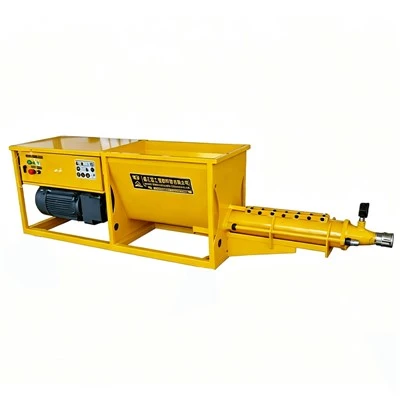
If you have questions about pump reach, mix design, or renting the right equipment for your next project, don’t hesitate to reach out to our team for a consultation. We’re here to make your concrete pour go smoothly, no matter how big or small the job.
Mixing Sprayer References
American Concrete Pump Association. (2022). Concrete Pumping: Best Practices for Reach and Performance.
Construction Equipment Guide. (2023). Truck-Mounted Concrete Pump Specifications and Reach Capabilities.
National Ready Mixed Concrete Association. (2021). Concrete Properties and Their Impact on Pump Efficiency.
Occupational Safety and Health Administration. (2020). Safe Operation of Concrete Pumps, Including Outrigger Placement.
Zhejiang Wengong Intelligent Technology Co., Ltd.
Zhejiang Wengong Intelligent Technology Co., Ltd. is one of the most professional concrete pump manufacturers and suppliers in China. With abundant experience, we warmly welcome you to buy durable concrete pump made in China here and get quotation from our factory. Quality products and reasonable price are available.
Address: No.111 Huakang Road, Liuao Village, Qiaoxia Town, Yongjia County, Wenzhou City, Zhejiang Province, China
E-mail: sales007@cngcjx.com
WebSite: https://www.wallgoe.com/
