If you’ve ever stood in a home improvement store’s drywall aisle, staring at rows of uniform, pre-cut profiles stacked neatly on pallets, you’ve probably wondered why some contractors I work with come to me instead. For over a decade, I’ve run a small custom drywall profile shop, and one of the first questions I hear from potential clients—whether a residential remodeler or a commercial builder—is always: “What’s the real cost difference between your custom profiles and the standard ones off the shelf?” Special Custom Drywall Profile

It’s not a simple answer. If you’re only looking at upfront material costs, standard profiles might seem like the no-brainer. But if you dig into the full lifecycle of a drywall installation—from labor and waste to structural and aesthetic accuracy—those “cheap” standard profiles often hide hidden costs that can eat into your project budget faster than you’d expect. Let’s break this down, from the numbers that show up on a quote to the unseen expenses that make custom profiles a smarter investment for many jobs.
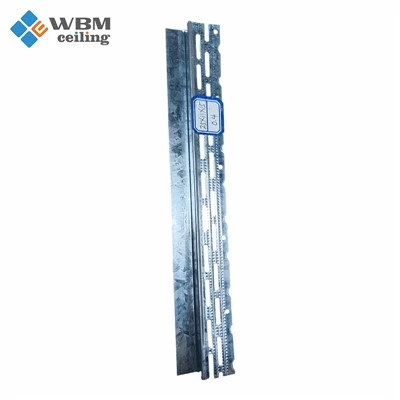
First, let’s get clear on what we’re talking about. Standard drywall profiles are mass-produced in runs of millions, designed to fit the most common building gaps and angles: 90-degree corners, 1/2-inch wall gaps, standard door and window openings. They’re made from thin, uniform metal (usually 25-gauge steel) stamped into shape with heavy industrial machinery, then sold in 8- to 10-foot lengths that you cut down on site. Custom profiles, on the other hand, are fabricated to exact specifications—whether that’s a 7-degree angle for a curved wall, a 1/4-inch gap for a historic renovation’s old plaster walls, a curved radius for a residential living room’s accent wall, or a custom edge profile for a commercial space’s sleek, modern finish. Each custom job is unique, so every profile is cut, bent, and finished to match a project’s exact blueprints.
The most obvious cost gap is upfront material. A standard 10-foot 90-degree corner bead runs for roughly $1.20 per linear foot at a big-box store. For a 1,000-square-foot residential remodel, that’s maybe $120 total for all the corners. A custom profile for that same space? On average, it’s 30% to 50% more expensive per linear foot. Wait—so why would anyone pay more? Let’s talk about where that extra money goes, and what you save elsewhere.
Labor is the biggest hidden cost with standard profiles. When you’re working with a one-size-fits-all product, you’re spending hours on site modifying it to fit. Take a curved accent wall: standard profiles can’t bend to a tight radius, so contractors have to either make incremental cuts along the back of the profile to “flex” it into place (which weakens the metal and creates gaps) or build custom wood forms to support it. For a 10-foot curved wall, that modification can add 2 to 3 hours of labor—at a typical drywall contractor rate of $65 an hour, that’s $130 to $195 in extra work, on top of the cost of the standard profile.
Custom profiles eliminate that entirely. We fabricate each profile to the exact radius of your wall before it leaves our shop, so a contractor can unbox it, hold it up to the wall, and screw it in—no cutting, no bending, no modifying. For that same curved wall, labor time drops to 20 minutes, and the total labor cost is under $25. That’s a net savings even before you account for material differences.
Then there’s waste. Standard profiles are mass-produced to fit standard lengths, so you often end up with leftover material that’s too short for a cut, or that doesn’t align with a unique opening. For a commercial project with 50 custom door openings, for example, standard profiles would require cutting each piece to fit, and you’d waste roughly 15% of the material as offcuts. With custom profiles, we fabricate each piece to the exact length needed, with almost no scrap. For that same commercial project, that cuts material waste from 15% to less than 2%, saving you on both material costs and the time spent hauling scrap to the dump.
A big one that’s easy to miss: structural integrity. Standard profiles are thin (usually 25-gauge) to keep production costs low, but that makes them prone to bending or warping when installed on non-standard surfaces. Take a basement wall with an uneven concrete block base: a standard 90-degree corner won’t sit flat, so when you tape and mud it, you’ll end up with cracks or bulges months down the line. To fix that, you have to rip out the old mud and re-install, adding another 8 to 10 hours of labor. Custom profiles can be made with thicker gauge steel (18 or 20 gauge) to match uneven surfaces, so they sit flush on the first try. That’s no future repair cost—something standard profiles almost never account for in their upfront pricing.
For historic renovations, the cost gap is even starker. Many old homes have walls that aren’t 90 degrees, or door openings that are 1/8-inch wider than standard, because they were built by hand without precision measurements. Standard profiles won’t fit, so contractors have to spend days making custom jigs or patching gaps with joint compound, which creates an uneven finish. Custom profiles are made to match the exact measurements of a historic home’s unique walls, so the finish is seamless. For a 100-year-old home’s main floor remodel, that can save 12 hours of labor—$780 at standard rates—all while preserving the home’s original architectural details, which is worth more than the upfront cost difference of custom profiles.
Now, let’s talk about when standard profiles actually make sense. If you’re a small residential job with uniform walls: a new home with 90-degree corners, standard door and window openings, no curves or odd gaps. For that, the $0.80 per linear foot difference between standard and custom might add up to only a few dollars, and you won’t waste time modifying materials. But if you’re doing a remodel, a curved wall, a historic space, a commercial project with unique openings, or a space with uneven surfaces? The upfront cost of custom profiles is offset by savings in labor, waste, and future repairs.
I’ll be honest: I’ve had clients come to me after a bad experience with standard profiles. Last year, a contractor in Chicago called me in a panic—he’d installed standard corner beads on a mid-rise apartment building’s curved lobby walls, and they kept warping after the first coat of mud, requiring 20 re-installs across 10 floors. He ended up ripping out the standard profiles and switching to custom ones from us, and his total cost for the profiles ended up being the same as if he’d bought the standard ones and paid for the rework. That’s not an anomaly. Data from the National Association of Home Builders (NAHB) backs this up: for projects with non-standard framing, custom drywall profiles reduce total installation costs by an average of 18%, even with the higher upfront material price.
Another point: finishing quality. Custom profiles have consistent edges and finishes, because they’re fabricated to exact specifications. Standard profiles often have slight variations in their bend or edge, which means the joint compound has to be sanded down more to get a smooth finish. That adds time to the finish work, too. For a high-end residential project where the finish is the main selling point, that extra sanding can add 5 to 10 hours of labor, which is a cost that doesn’t show up on the standard profile’s price tag.
I know price is always a factor. That’s why I don’t push custom profiles on every job. Last month, a small homeowner came to me for a bathroom remodel—just a few standard corners, a standard shower enclosure. I told him standard profiles would work, and even calculated that using custom would cost him an extra $80 for the job, with no extra benefit. But when a commercial developer comes to me with a 20,000-square-foot retail space with curved walls and unique storefront openings, we work together to outline the labor and waste savings, and it’s clear the custom profiles pay for themselves within the first half of the project.
If you’re weighing your options, here’s a simple rule of thumb: calculate not just the cost of the profiles, but also the time your team spends modifying materials, fixing mistakes, and handling waste. For jobs with unique structural or aesthetic requirements, custom profiles aren’t just a luxury—they’re a cost-saving investment. For standard, uniform spaces, standard profiles are still a great choice.
But if you’re looking to streamline your install, get a seamless finish, or avoid future repairs, custom profiles are worth the conversation. Whether you’re a contractor with a one-off remodel or a developer with a large commercial project, I can help you design profiles that fit your exact needs, and give you a transparent breakdown of the costs upfront, so you can see exactly where your money goes. If you’re tired of wasting time and money on standard profiles that don’t fit, reach out to discuss your project details. We can provide a custom quote tailored to your space, no hidden fees, no generic offers.
Steel Coil References
National Association of Home Builders. (2022). Cost-Effective Solutions for Non-Standard Residential Construction. NAHB Research Center.
Drywall Institute of America. (2021). Labor Efficiency and Material Waste in Drywall Installation. Drywall Industry Technical Bulletin.
Langfang Weikaihua Building Material Co., Ltd.
Langfang Weikaihua Building Material Co., Ltd. is one of the most professional special custom drywall profile manufacturers and suppliers in China, featured by quality products and low price. Please rest assured to buy discount special custom drywall profile from our factory. Contact us for customized service and free sample.
Address: Peng Er Wan Villiage, Zhao Ge Zhuang Town, Wen’an County, Langfang City, Hebei Province, China
E-mail: joyce@wbm.cc
WebSite: https://www.wbmceiling.com/
