If you’ve ever sat across a pipeline project manager during a bid meeting, or pulled a material spec for a cross-country oil line, you’ve probably stumbled across the two letters no one wants to misread: PSL1 and PSL2, both tied to API 5L line pipe. Let’s cut through the industry jargon and break down what these mean, why they matter, and how as a line pipe supplier, I see them play out in real projects every single day. API 5L Line Pipe

First, a quick refresher for anyone new to the space: API 5L is the American Petroleum Institute’s standard for line pipe, the steel tubes that carry oil, gas, water, and even some carbon dioxide across thousands of miles. It’s not a random set of rules—it’s developed by the industry, for the industry, to make sure pipe doesn’t fail mid-job. The two PSLs, or Product Specification Levels, split pipe into two tiers. PSL1 is the more basic, general-purpose tier, and PSL2 is the higher, more rigorous tier for high-stakes applications.
I remember my first year in this business, back when I was a junior sales rep, a client called me in a panic. They’d ordered PSL1 pipe for a project in the Gulf of Mexico, only to realize their design pressure was 20% higher than what PSL1 was rated for, and they’d missed the PSL line in the spec. That’s the kind of mistake that delays projects, hits budgets, and even puts safety at risk. So let’s start with the core differences, starting with what PSL1 actually is.
PSL1 is the entry-level product, designed for applications where failure is not catastrophic, and loads are predictable. It’s cheaper to manufacture, faster to produce, and it meets the minimum requirements set out in API 5L, edition 46.1 (the current one as of 2024). The testing for PSL1 is minimal compared to PSL2. Manufacturers test for things like yield strength, tensile strength, and elongation to make sure the pipe isn’t going to snap under normal pressure. We also test for chemical composition to make sure there’s no random batch with too much sulfur or phosphorus, which make steel brittle. But that’s about it. There’s no non-destructive testing (NDT) of the entire pipe length, no verification of individual pipe dimensions beyond a random sample, and no tracking of every piece from mill to job site.
PSL1 works great for low-stakes applications. We sell a lot of PSL1 for water lines in municipal projects, for gas lines in residential subdivisions, and for small gathering lines in oil fields that only carry product a few miles. Last year, we supplied 12 miles of PSL1 X42 pipe for a municipal water project in rural Ohio, and it worked exactly as it was supposed to—no issues, no extra costs, exactly what that project needed.
Now PSL2, that’s where things get serious. PSL2 is built for high-pressure, long-haul pipelines, subsea lines, and any project where a failure could lead to an explosion, environmental disaster, or major loss of life. The testing and verification for PSL2 is so strict because API 5L designed it that way. Let’s break down the differences in testing first, because that’s where the biggest gap is between PSL1 and PSL2.
For starters, every single length of PSL2 pipe is tested, not just a random sample. That includes hydrostatic testing—filling the pipe with water and pressurizing it to 1.5 times its maximum operating pressure, holding it for 10 seconds, and making sure it doesn’t leak or deform. That’s not something every PSL1 pipe goes through. We once had a batch of PSL2 X70 pipe fail hydrostatic testing, and we had to scrap the whole batch—something we never have to do with PSL1, because we only test samples.
There’s also full-length non-destructive testing for PSL2. That means we run ultrasonic testing along the entire length of every pipe to check for hidden flaws, like seams or cracks that would be too small to see with the naked eye. For PSL1, we only test a few random pipes in a batch. That’s a huge difference—if you have a 500-mile pipeline, a single PSL1 pipe with a hidden flaw could burst years down the line, but PSL2 eliminates that risk.
Then there’s the traceability. PSL2 pipe has a unique serial number stamped on every length, and that number is logged all the way from the mill where the steel is made, through the manufacturing process, to our warehouse, and finally to the job site. If there’s ever an issue with a batch, we can track every single pipe back to its origin in 10 minutes, not days. PSL1 has minimal traceability—most of the time, you only get a batch number, and if there’s a problem, you have to sort through hundreds of pipes to find the bad ones.
Another key difference is the control over yield strength. Yield strength is the amount of pressure a pipe can take before it starts to deform, and it’s critical for pipeline design. For PSL1, the yield strength range is pretty wide. For example, X52 PSL1 pipe has a yield strength requirement of 52,000 psi, but the tolerance is plus or minus 10,000 psi. That means one pipe could have a yield strength of 48,000 psi, and another from the same batch could have 60,000 psi. That’s not a big deal for low-stakes lines, but for a high-pressure pipeline, that 12,000 psi difference could mean the difference between working safely and failing. For PSL2, the yield strength tolerance is plus or minus 5,000 psi—way tighter. We can’t just turn out a batch of PSL2 and ship it; we have to test every pipe to make sure it falls within that narrow range.
Chemical composition is also more strictly controlled for PSL2. Sulfur and phosphorus levels are limited to 0.03% max for PSL1, but only 0.02% max for PSL2. Lower sulfur means less brittle steel, which is critical for lines that have to bend or be laid in uneven terrain. Last winter, we had a PSL2 project in the Rocky Mountains, where the pipe had to be bent into sharp angles to go around mountain ridges. The tighter chemical control made the steel more flexible, and none of the pipes cracked during installation—something that would have been a risk with PSL1.
Now, I know what some of you are thinking: “Why would anyone ever pay for PSL1 when PSL2 is safer?” The answer is cost. PSL2 pipe is 10 to 15% more expensive than PSL1, because it takes more time, more testing, and more strict quality control to manufacture. For a small residential gas line that runs half a mile, PSL1 is more than enough—you don’t need to spend extra for the extra testing when the risk of failure is minimal. But for a 1,000-mile long-haul pipeline carrying natural gas to a city of two million people, PSL2 is non-negotiable.
I’ve seen too many projects cut corners on PSL to save money, and it never ends well. A few years ago, a small oil company in Texas tried to use PSL1 pipe for a high-pressure gathering line, and within two years, three pipes burst. They had to shut down production for six months, spent millions on repairs, and faced environmental fines that put their whole operation at risk. That’s the kind of mistake that makes us as suppliers work harder to educate our clients on the difference between PSL1 and PSL2, not just push the more expensive product.
So how do you know which one you need? It all comes down to three questions: What’s the maximum operating pressure of your line? What’s the length and purpose of the pipeline? And what’s the consequence of a failure? If it’s a short, low-pressure line with no risk of harm to people or the environment, PSL1 is perfect. If it’s a long, high-pressure line, subsea line, or any line where a failure could be catastrophic, PSL2 is the only way to go.
As a supplier, we work with every client to make sure they get the right product for their project, not just the most expensive one. We don’t upsell PSL2 to someone who needs PSL1, because we know that would set them up for unnecessary costs. But we also don’t let someone order PSL1 for a project that needs PSL2, because that would put their project and their team at risk.
Over the years, I’ve seen the line between PSL1 and PSL2 get blurry for some new engineers, who forget to check the PSL designation in their spec. That’s why we always include a PSL certificate with every batch of pipe we ship, so our clients don’t have to wonder what they’re getting. The certificate lists all the test results, the yield strength, the chemical composition, and the traceability numbers, so they can prove to their project managers or safety inspectors that they’re using the right product.
Another common misconception is that PSL1 and PSL2 are different types of steel, but that’s not true. Both can be made from the same steel grades—X42, X52, X60, X70, X80, etc. The difference is not the steel itself, but the level of testing, verification, and quality control that goes into the pipe before it leaves the mill. A piece of X70 steel could be PSL1 for a low-pressure water line, or PSL2 for a high-pressure gas line. It’s all about what you need it for.
I also want to note that API updates this standard regularly, so it’s important to stay up to date. The latest edition of API 5L (Edition 46.1, as of 2024) made some small changes to PSL2 testing requirements, including adding more strict NDT for girth welds. As a supplier, we make sure all our pipe is manufactured to the latest edition, because using an old edition could mean not meeting current project regulations.
At the end of the day, choosing between API 5L PSL1 and PSL2 is about balancing cost and risk. PSL1 is reliable, affordable, and perfect for low-stakes applications. PSL2 is safer, more rigorously tested, and necessary for high-stakes projects. As someone who’s been in this industry for over a decade, I’ve seen how one bad pipe can ruin a project, and how choosing the right PSL can prevent months of delays, millions in costs, and even loss of life.
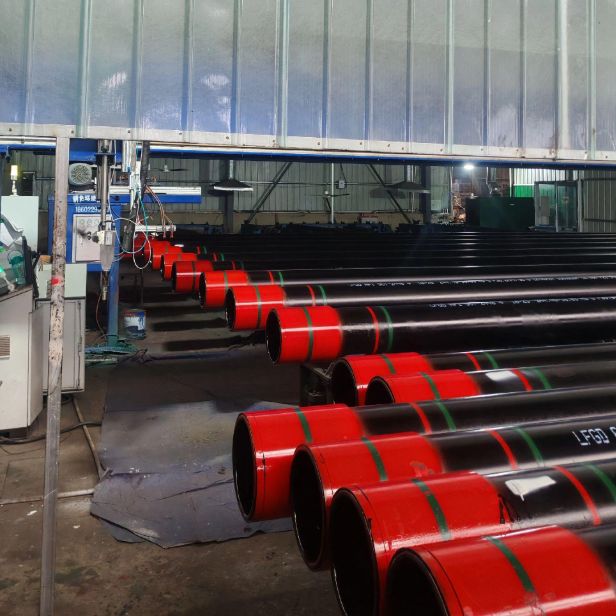
If you’re working on a pipeline project and you’re not sure which Product Specification Level is right for your needs, we’re here to help. We can walk you through your project requirements, explain the differences between PSL1 and PSL2 in plain language, and provide you with the right pipe at a competitive price. Our team has years of experience working with municipal, oil and gas, and industrial clients, and we’ll make sure you get exactly what you need, no hidden costs, no confusing jargon. Don’t take chances with your pipeline project—reach out today to discuss your line pipe requirements and get a tailored solution for your project.
Main Products References:
API Standard 5L, 46th Edition, American Petroleum Institute, 2024.
Pipeline Specification and Quality Assurance, Pipeline Industries Guild, 2023.
Global Line Pipe Market Report, 2024–2030, Market Research Future, 2024.
Jiangsu Xurui Metal Group Co., Ltd.
With abundant experience, we are one of the most professional api 5l line pipe manufacturers and suppliers in China. We are committed to providing high quality metal products for global clients. Please feel free to wholesale bulk high-grade api 5l line pipe in stock here from our factory.
Address: 32-117, South Stainless Steel Market, Xinwu District, Wuxi, Jiangsu, China
E-mail: Mia@xuruimetal.com
WebSite: https://www.xurui-steel.com/
