Hey everyone, it’s Jake here from your go-to power transmission tower supplier—you know, the crew that makes sure your projects don’t hit last-minute snags that kill deadlines and blow budgets. Today I wanna pull back the curtain on something most folks don’t ask enough about: how we actually test these bad boys before they ever show up on your job site. Because let’s be real—those 100+ foot steel towers don’t just get bolted together and shipped out. Skimp on testing, and you’re looking at bent metal, collapsed lines, or worse—safety hazards mid-install. I’ve been in this game for 12 years, seen a whole lot of cheap, untested towers flop hard, so I’m gonna walk you through exactly what we do at our facility to make sure your next tower setup goes off without a hitch. Power Transmission Towers

First off, let’s get one thing straight: testing isn’t just a box we tick for compliance (though yes, OSHA, IEEE, and those local utility regulations do require it). It’s how we proof every single part of the tower, from the tiny ½-inch bolt to the 10-ton truss that holds up the lines. We start testing before the steel even gets cut, actually—because pre-manufacturing checks save us from wasting thousands on scrap later. Wait, don’t zone out on me here; this first step is way simpler than it sounds. We run material tests on every coil of steel we receive. No, we don’t just take the mill’s word for it (trust me, some mills cut corners and send steel that’s thinner than advertised). We take small, punch-sized samples from each batch, run tensile and yield strength tests. Tensile strength is how much pull the steel can take before it snaps, right? Yield strength is the point where it bends and never goes back—we can’t have towers staying bent after the first wind gust. Last month, we caught a batch where the steel’s yield strength was 15% below spec. Turned out the mill had mixed a batch of scrap steel in. Nixed the whole shipment, saved us from a huge headache later.
Next up, once the tower’s parts are cut, shaped, and bolted together (in our prototype shop first, no mass production yet), we do what’s called a static load test. This is the big one—everyone who’s ever ordered a tower asks about this one. Here’s how it works: we mount the full-scale prototype tower to a concrete foundation that’s anchored so tight, it doesn’t budge. Then we apply controlled, measured loads to simulate everything the tower will face in the real world—wind, ice, the weight of the power lines, even the occasional ice storm or seismic shift. Wait, we don’t just guess the loads, by the way. We use data from the location you’re installing the tower in. If you’re in Kansas, we crank wind loads up to 140 mph (that’s Category 4 hurricane level, for reference). If you’re in Minnesota, we add ½ inch of radial ice on every cable and tower arm. If you’re in California? We test for seismic shear forces from 7.0 magnitude quakes. We had a client last year in Oregon who told us they wanted to skip seismic testing to save a few days—shook our heads. Turned out the site was right on a fault line, and a prototype that failed seismic testing got rebuilt for a fraction of the cost of replacing a collapsed tower mid-project.
We monitor every second of the static load test with a network of strain gauges, accelerometers, and even high-res cameras. Strain gauges are tiny sensors we glue to every critical point—like where the arms meet the main tower leg, or where the crossbars hold the lines. They tell us how much each part is stretching or compressing under load. Accelerometers track how much the tower sways or vibrates. If we hit our maximum load (let’s say 120% of the designed load, just to be safe) and no part bends beyond the allowable limit, no weld cracks, no bolt breaks—then the prototype passes. If something does give? We tear it apart, figure out why, tweak the design, and test again. No cutting corners here. Last quarter, one of our 500kV towers had a weld in the lower truss that cracked at 110% load. We went back, adjusted the weld size, added a gusset plate, and tested it again—this time it held at 140% load. That’s the kind of attention to detail your project needs.
Wait, there’s more than just static load testing, right? Real-world conditions aren’t just standing still—they’re wind gusting from all directions, rain, snow, even salt spray if you’re installing near a coast. That’s where our environmental durability testing comes in. We have a climate chamber big enough to hold a full tower prototype (well, the main legs and crossbars, anyway). We blast it with salt spray for 1,000 hours—simulating 20 years of coastal salt exposure. We cycle temperatures from -40°F to 120°F to test for thermal expansion and contraction, which can weaken welds or cause bolts to work loose. We even simulate UV radiation for years to make sure the powder coating or hot-dip galvanizing doesn’t peel or fade (bad coating means rust, which means structural failure down the line). A few months back, we had a client installing a tower in Florida’s Keys where salt spray is brutal—they almost went with a cheaper galvanizing process. We ran a salt spray test on their proposed process vs. ours, and their proposed process corroded through in 600 hours vs. our process that didn’t show any rust after 1,200 hours. They switched, saved themselves from having to replace the tower in 5 years instead of 20.
And we can’t forget about the small stuff—like bolts and connectors. Everyone thinks the big steel parts are what matter, but a loose bolt can take down an entire tower faster than a bad weld. We test every bolt in a fastener tension test machine. We check their torque value—how much force it takes to tighten them, and how well they hold that torque over time. We also test for corrosion resistance on bolts, same as the steel. Last year, we caught a batch of bolts that had the correct tensile strength but were coated with a cheap zinc that peeled after salt spray testing. Swapped them out before shipping to a wind farm in Texas, where the dirt and humidity would’ve made those bolts rust fast.
Oh, and one final test we do that a lot of suppliers skip: field validation testing with our client’s team (if they’re local, anyway). We’ll take the prototype to a test site near their area, erect it with their install crew, and do a full walkthrough. We check that all parts line up, that the assembly instructions are clear, that the fit is tight—no missing holes, no parts that are too heavy to lift with their crane. Last year, a client in Alberta had a problem with a tower where the crossbar was 2 inches too short on one end. Turns out their CAD file had a typo. We caught that during field validation, fixed it before they shipped all the parts, and saved them $50k in rework. That’s the kind of partnership we do—we’re not just selling towers, we’re making sure you can put them together without extra hassle.
Now, I know what some of you are thinking: “This sounds like a lot of work, so it must be expensive.” But trust me—skipping testing costs way more. I’ve seen clients cut corners on testing and end up with towers that collapse during installation, have to shut down power lines to fix them, and pay thousands in downtime fees. Last year, a small utility in Ohio bought untested towers from a cut-rate supplier. One tower collapsed during a wind gust, taking down three power lines. They had to pay $200k in emergency repairs, plus $50k in lost revenue from customers without power. If they’d paid a little extra for a tested tower from us, they would’ve avoided that entire mess.
At the end of the day, our whole process is about one thing: making sure your tower works as hard as you need it to, for as long as you need it to. We don’t do “good enough” testing—we test to the limit, because that’s what our customers deserve. If you’re tired of suppliers who brush off testing as unnecessary, who just want to ship parts and disappear? Hit us up for a conversation. We’ll send you our test reports for any tower, walk you through exactly what we tested, and answer every question you have. We’re not here to sell you the cheapest tower—we’re here to sell you a tower that works, no surprises, no headaches, no last-minute fires.
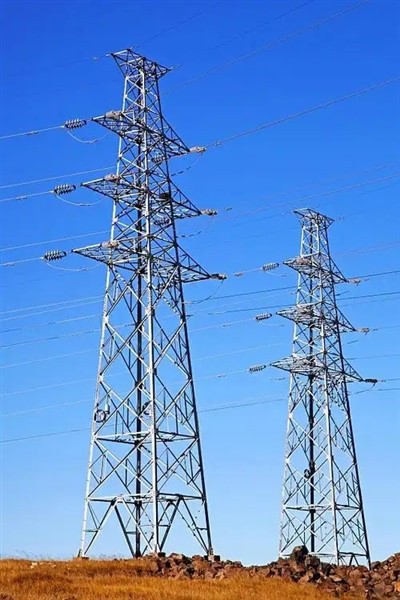
So next time you’re planning a power transmission project, remember: the tower’s strength isn’t in the steel—it’s in the testing we do before it ever leaves our yard. If you wanna chat about your next project, shoot us a message. We’re here to make your job easier.
Electrical Tower Stand References
- IEEE Std 602-2018, IEEE Standard for Safety in Substation Grounding
- ASTM A370, Standard Test Methods and Definitions for Mechanical Testing of Steel Products
- NESC (National Electrical Safety Code) Part 23: Structure Design Requirements
Hebei Yifeng Steel Structure Co., Ltd.
As one of the most professional power transmission towers manufacturers and suppliers in China, we offer a wide range of products with superior quality. Please feel free to buy cost-efficient power transmission towers for sale here from our factory. Contact us for more details.
Address: Guangchuan Town Industrial Zone, Jing County, Hengshui City, Hebei Province
E-mail: hbyfgjg@163.com
WebSite: https://www.yf-powertowers.com/
