Hey there, if you’ve ever been deep in the weeds of a sewage treatment plant (STP) project, you know how much rides on picking the right pipe fittings. I’m [your company name, hold off on the fancy legal stuff for now—just call me a butt fusion drainage fittings supplier who’s been in the game for over a decade, working with STP managers, civil engineers, and maintenance crews all over North America. One question I get all the time is: “Are butt fusion drainage fittings even worth the hassle in a sewage treatment plant?” Let me break this down straight, no corporate jargon, no fake sales fluff—just what I’ve seen hold up, and what’s total garbage for an STP’s specific chaos. Butt Fusion Drainage Fittings
First, let’s get one thing straight: STPs aren’t your regular backyard drainage system. This stuff handles raw sewage, chemicals, volatile gases, way more pressure than a residential pipe, and maintenance crews crawling in tight, smelly spaces every few years. A lot of STP engineers default to flanged or threaded fittings because that’s what they learned in school, but here’s the tea: butt fusion fittings are actually killing it in a lot of the newer STP upgrades, and honestly, some of the old-timers are finally switching over because the failure rates are way lower.
Wait, let’s define “butt fusion” real quick for anyone nodding along like “what’s that?” It’s a method where you heat two ends of plastic pipe (usually HDPE, the go-to plastic for STP piping) until they’re malleable, then push ’em together with consistent pressure. The result is a seamless, homogeneous joint—no threads to strip, no gaskets to leak, no flanges that rust or seize up when you need to disconnect something. That’s the core of why these fittings work so well in places where leaks = bad.
Let’s talk about the big STP-specific pain points first, ’cause that’s where this matters most. Number one: chemical resistance. STPs deal with all kinds of stuff—corrosive wastewater from industrial run-off, chlorine for disinfection, acids from sludge digestion, even methane and hydrogen sulfide gas, which are super corrosive to metal. Flanged steel fittings? They rust in months, especially if the gaskets get chewed up by H2S. Threaded PVC? It can crack under constant chemical exposure, and the threads are a perfect spot for bacteria and gunk to get trapped, leading to hidden leaks. Butt fusion fittings, though—most are HDPE or PP (polypropylene), both of which are inert to almost all the chemicals an STP throws at you. I’ve had customers send me data from 7-year-old butt fusion joints that still pass pressure tests with zero chemical degradation, while their old steel flanges on the same line needed replacement every 3 years. That’s a big win for long-term costs, right?
Second, pressure and flow consistency. STP pipes run at varying pressure—sometimes full, sometimes half, sometimes surging during peak flow (like when a city’s all using toilets and showers after work). Butt fusion joints aren’t just strong when you install ’em; they flex with the pipe, too. HDPE’s got a little give, so if the ground shifts a tiny bit (which happens all the time around STPs, since they’re built on treated sludge beds or low-lying ground), the joint doesn’t crack or split. Flanged fittings? They require perfect alignment—if the pipe moves even a quarter inch, the gasket blows or the flange warps, leading to leaks. I had a customer in Ohio last year who switched a 12-inch wastewater line from flanged steel to butt fusion HDPE after three flange failures in two years. Their maintenance guy told me now he checks that line once a year instead of once a month, and hasn’t had a single leak since. That’s not luck—that’s how the joint is made.
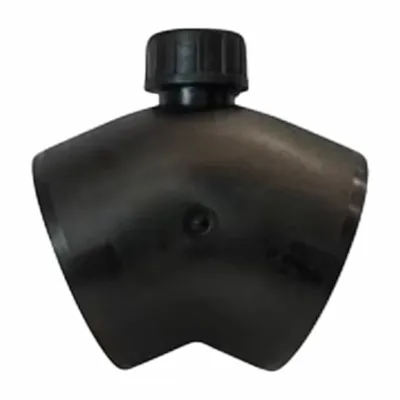
Wait, but let’s be real—no product is perfect. I’m not gonna sit here and say butt fusion fittings work for every part of an STP. Let’s talk about the caveats, because that’s the stuff that separates the suppliers who know their stuff from the ones just trying to move product. First, butt fusion works best with straight runs and consistent pipe sizes. If you need a 90-degree elbow or a reducer that’s like 2 pipe sizes smaller? You can get custom butt fusion fabricated fittings, but you can’t just pick one off a shelf like a threaded fitting. That’s a trade-off—you have to plan ahead, not just grab something from a job site dumpster. Second, installation isn’t plug-and-play. You can’t just heat two ends and push ’em together—you need a properly calibrated butt fusion machine, a trained tech who knows the right heat time, pressure, and cool-down period. A bad butt fusion joint is just as bad as a bad threaded one, if not worse, because you might not see the defect until it leaks later. That’s why I work directly with every customer to either help them find a certified local installer or send my own team over to train their crew—cutting corners on install kills the whole thing.
Another big point: cost. People always gripe upfront that butt fusion fittings (and the machine rental) cost more than flanged steel or threaded PVC. But let’s do the math, ’cause that’s what STP managers care about. Flanged steel: initial cost is 20-30% less, but you’ve got to budget for annual maintenance—replacing gaskets, tightening bolts, painting to stop rust, repairing small leaks. Over 10 years, that’s like 2x the cost of butt fusion. Threaded PVC: cheaper initial, but threads can corrode, get damaged during install, and you have to seal ’em with tape or dope, which can fail in chemical environments. Butt fusion: once installed, that joint is good for 50+ years, no maintenance, no leaks. I had a customer in Texas who did a 5-year cost comparison on a 8-inch sludge line—they spent $12k upfront on butt fusion, vs $7k on flanged steel, but in 5 years they’d spent $10k on steel maintenance, so by year 6, the butt fusion was already saving them $5k. That’s not chump change for a small STP on a tight budget.
Wait, what about the nasty stuff—raw sewage, bacteria, debris? I’ve seen a lot of people worry that butt fusion joints will get clogged with gunk. But because the joint is seamless, there’s no gap between the pipe and the fitting, right? Threaded joints have tiny crevices where solids get stuck, leading to blockages that need to be snaked. Flanged joints have gaskets that can erode, leaving gaps for debris to build up. I’ve had customers tell me that their butt fusion lines have zero blockages in 10 years, while their old lines with other fittings needed snaking every 6 months. That’s a huge win for operations—no unexpected shutdowns because of a clogged line.
But let’s not act like there’s no hesitation. A lot of older STP engineers still remember the bad old days of butt fusion—when the machines were clunky, the joints would crack if you didn’t get the heat just right. That’s not the case anymore. The technology’s come a long way: modern butt fusion machines are digital, so they set heat time and pressure automatically, take the guesswork out of it. The materials are better, too—HDPE for butt fusion now has UV inhibitors, so it works even in above-ground lines, which is a big plus for STPs that have pipes running along the exterior of buildings. PP fittings are even better for high-temperature sludge lines, since they can handle temps up to 200°F, which is common in digestion lines.
Here’s the thing I tell every customer who’s on the fence: it depends on where you’re using it in the STP. Let’s break it down by zone, so you can see where butt fusion makes sense:
- Inlet lines (raw sewage): Perfect—high flow, corrosive, no need for frequent disassembly, so the seamless joint is ideal.
- Digestion lines (sludge, high temp): PP butt fusion fittings work great here, way more resistant to acid and high temps than metal.
- Effluent lines (treated wastewater): HDPE butt fusion holds up to chlorine and other disinfection chemicals, no leaks.
- Disassembly points (valves, pumps): This is where butt fusion gets tricky. If you need to take a line apart regularly (like when replacing a pump), you don’t want a permanent fused joint. So for those spots, we recommend a transition fitting—fusion on one end, flanged or threaded on the other. That way you get the best of both worlds: a strong, long-lasting joint in the permanent line, and a easy-to-disconnect fitting where you need it.
I’ve been in this business long enough to see trends come and go, and I’ve seen STP projects fail because they cut corners on fittings. Last year, I worked with a small municipal STP in Michigan that opted for threaded PVC for their new lift station line. Within 18 months, 12 of the 20 joints had leaked—gaskets had rotted, threads had corroded, and they had to shut down half the plant to repair them. They ended up replacing all those joints with custom butt fusion fittings, and now 2 years later, not a single leak. That’s the kind of real-world experience I bring to the table, not just textbook stuff.
So, to answer the original question: Are butt fusion drainage fittings suitable for use in sewage treatment plants? The short answer is—hell yeah, in most cases, as long as you pick the right material, install it right, and plan for where you need disassembly. The old excuses that they’re too expensive, too hard to install, or not durable enough don’t hold up anymore. They’re actually one of the most reliable fittings for the harshest, most high-stress parts of an STP.
PPR Fittings Now, I get that every STP is different—different size, different chemicals, different maintenance budgets. If you’re working on a project right now and you’re trying to figure out if butt fusion is right for your lines, or if you need custom fittings that fit your exact specs, hit me up. I don’t do pushy sales pitches, I’ll give you the real skinny on what works for your setup, help you with installation tips, and make sure you get fittings that won’t leave you with messy, costly leaks down the line. No hidden fees, no fancy jargon—just a guy who knows his butt fusion and wants to help your STP run smooth.
References
- American Water Works Association. (2020). HDPE Pipe and Fittings for Wastewater Applications. AWWA Manual M55.
- Plastics Pipe Institute. (2021). Chemical Resistance of Thermoplastic Pipes and Fittings for Municipal Sewage Systems. Technical Report TR-46.
- National Association of Clean Water Agencies. (2022). Capital Costs and Maintenance Trends for Wastewater Piping Systems. NACWA Report 22-03.
- International Codes Council. (2021). IPC (International Plumbing Code) Requirements for Butt Fusion Fittings in Sanitary Sewer Applications.
Qingdao Polyfusion Machinery Co., Ltd.
As one of the most professional butt fusion drainage fittings manufacturers and suppliers in China, we have world-leading production equipment and strong manufacturing capabilities. Please feel free to buy bulk high quality butt fusion drainage fittings from our factory.
Address: Chengyang Industry Zone, Chengyang, Qingdao, Shandong, China
E-mail: export01@qdpolyfusion.com
WebSite: https://www.polyfusionfittings.com/
