As a supplier of Pull Out Anchor Testers, I am often asked about the types of anchors that our testers can effectively evaluate. In this blog post, I will delve into the various anchor types that our Pull Out Anchor Testers are designed to test, highlighting their unique characteristics and the importance of accurate testing. Pull Out Anchor Tester
Mechanical Anchors
Mechanical anchors are a widely used type of anchor in construction and engineering applications. They rely on mechanical interlock or friction to secure themselves to the base material. Our Pull Out Anchor Testers are well – suited to test different kinds of mechanical anchors.
Expansion Anchors
Expansion anchors work by expanding against the walls of the hole drilled in the base material, creating a tight fit. There are two main types: sleeve expansion anchors and wedge expansion anchors. Sleeve expansion anchors typically consist of a threaded bolt, a sleeve, and a nut. When the nut is tightened, the sleeve expands against the hole wall. Wedge expansion anchors, on the other hand, use a wedge that is driven into a cone – shaped sleeve to create expansion.
Our tester can accurately measure the pull – out force required to dislodge these expansion anchors from the base material. This is crucial as over – or under – designed expansion anchor installations can lead to safety hazards. For example, in a high – rise building where expansion anchors are used to secure curtain walls, an under – performing anchor might not be able to withstand the lateral forces exerted by wind, potentially causing the curtain wall to detach.
Strike – In Anchors
Strike – in anchors are simple yet effective mechanical anchors. They are installed by driving them into a pre – drilled hole using a hammer. The anchor expands as it is driven in, gripping the sides of the hole. These anchors are commonly used in light – to medium – duty applications, such as hanging shelves or small fixtures.
Our Pull Out Anchor Tester can determine the anchor’s holding capacity, ensuring that it meets the requirements of the specific application. This is important because if a strike – in anchor fails to hold the intended load, it can result in damage to the fixture and pose a physical danger to people in the vicinity.
Chemical Anchors
Chemical anchors are another important category that our Pull Out Anchor Testers can effectively test. These anchors use a chemical adhesive to bond the anchor to the base material.
Epoxy – Based Anchors
Epoxy – based chemical anchors are popular due to their high strength and durability. The epoxy resin is mixed with a hardener and injected into the pre – drilled hole. The anchor is then inserted, and the chemical reaction between the resin and the hardener creates a strong bond with the base material.
Our tester is capable of evaluating the bond strength of epoxy – based anchors. This is especially important in critical applications like bridge construction or seismic – resistant building structures. In a seismic event, a weak epoxy – based anchor could fail, leading to structural collapse. By accurately testing the pull – out strength, we can ensure that these anchors are reliable under extreme conditions.
Polyester – Based Anchors
Polyester – based chemical anchors are often used in less demanding applications. They are more cost – effective than epoxy – based anchors and offer a good balance between strength and price. Our equipment can test the holding power of polyester – based anchors, ensuring that they are suitable for the intended use. For example, in residential construction, these anchors can be used for attaching handrails or small brackets, and proper testing can guarantee their long – term performance.
Concrete Screws
Concrete screws are a type of self – tapping screw that can be directly driven into concrete, brick, or block. They are convenient and easy to install, making them a popular choice for many DIY and professional projects.
Our Pull Out Anchor Tester can measure the pull – out resistance of concrete screws. This is essential because the strength of the connection depends on the screw’s ability to grip the base material. In outdoor applications, such as installing fencing posts or light fixtures, concrete screws need to withstand environmental factors like wind, rain, and temperature changes. By testing their pull – out strength, we can ensure that they remain secure over time.
Hollow Wall Anchors
Hollow wall anchors are used when installing fixtures on walls made of materials like drywall or plasterboard, which are not strong enough to support the weight of heavy objects on their own.
Toggle Bolts
Toggle bolts consist of a bolt with spring – loaded wings. When inserted through a hole in the wall and expanded on the other side, they provide a large surface area for support. Our tester can assess the pull – out force required to remove toggle bolts from the hollow wall. This is important in applications such as hanging heavy mirrors or cabinets on drywall. If a toggle bolt fails to hold the weight, it can cause the fixture to fall, resulting in damage and potential injury.
Plastic Hollow Wall Anchors
Plastic hollow wall anchors are commonly used for lighter – weight fixtures. They are easy to install and relatively inexpensive. Our Pull Out Anchor Tester can determine the holding capacity of these plastic anchors, ensuring that they are appropriate for the load they are expected to carry. For example, when hanging small picture frames or wall – mounted shelves, proper testing of plastic hollow wall anchors can prevent the fixtures from coming loose.
Importance of Accurate Testing
Accurate testing of different anchor types is of utmost importance for several reasons. Firstly, it ensures the safety of structures and the people who use them. In construction projects, whether it is a small residential building or a large commercial complex, the failure of an anchor can have catastrophic consequences. By using our Pull Out Anchor Testers to accurately measure the pull – out strength of anchors, we can identify any weaknesses before they lead to structural failures.
Secondly, accurate testing helps in quality control. Manufacturers can use our testers to ensure that their anchors meet the required industry standards. For example, in the anchor manufacturing process, batch – testing can be performed to guarantee that all products are of consistent quality. This not only protects the reputation of the manufacturer but also gives customers confidence in the products they purchase.
Finally, proper testing can optimize the design of anchor systems. Engineers can use the test results to select the most appropriate anchor type and size for a specific application. This can lead to cost savings by avoiding over – specification of anchors while ensuring the safety and performance of the structure.
How Our Pull Out Anchor Testers Work
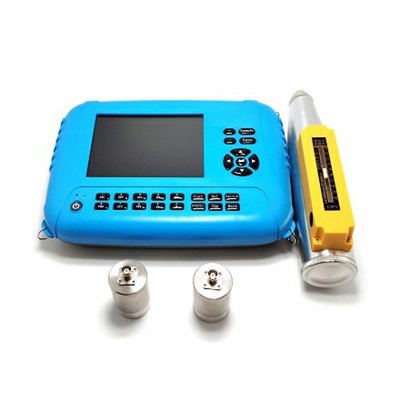
Our Pull Out Anchor Testers are designed with precision and ease of use in mind. They typically consist of a hydraulic or mechanical loading system, a force measurement device, and a control unit.
To conduct a test, the tester is first attached to the anchor in question. The loading system then applies a gradually increasing force to the anchor until it is either pulled out or reaches the maximum load capacity of the tester. The force measurement device records the pull – out force at the point of failure or at intermediate stages, allowing for detailed analysis.
The control unit of our testers provides accurate and reliable data recording and display. It can be configured to meet different testing standards and requirements. The data collected can be used to generate detailed test reports, which are valuable for quality control, design verification, and compliance purposes.
Contact Us for Your Testing Needs
If you are in the construction, manufacturing, or engineering industry and are in need of accurate and reliable anchor testing solutions, we are here to help. Our Pull Out Anchor Testers are designed to provide high – quality results for a wide range of anchor types.
Whether you are a contractor looking to ensure the safety of your construction projects, a manufacturer aiming for quality control, or an engineer seeking data for design optimization, our products can meet your requirements. We offer a range of tester models to suit different applications and budgets.
We understand the importance of technical support and after – sales service. Our team of experts is always ready to assist you with any questions you may have regarding the operation, maintenance, or interpretation of test results.
Electromagnetic Flow Meter Get in touch with us today to discuss your specific needs and how our Pull Out Anchor Testers can benefit your projects. We look forward to the opportunity to work with you and contribute to the success and safety of your endeavors.
References
- ASTM International. Standard Test Methods for Determining the Pullout Capacity of Anchor Bolts Embedded in Concrete masonry Assemblies. ASTM C1336 – 02(2017).
- European Technical Assessment. ETAG 001. European Technical Approval Guideline for Metal Anchors for Use in Concrete.
- Concrete Construction Handbook. Portland Cement Association.
Dalian Yheng Technology Co., Ltd.
Dalian Yheng Technology Co., Ltd. is one of the leading pull out anchor tester manufacturers and suppliers in China, also supports customized service. We warmly welcome you to buy high quality pull out anchor tester in stock here from our factory. Contact us for more details.
Address: F1605, NO.10 Huoju road, High-tech Industrial Zone, Dalian, China
E-mail: admin@dlyheng.com
WebSite: https://www.yhengphmeter.com/
