If you’ve ever worked with laser-based projection systems, 3D scanners, or automotive lidar, you’ve likely encountered a DOE laser module—even if you didn’t know it. As a supplier of these precision components, one question I get asked more than any other is: “What’s the divergence angle of a DOE laser module?” It’s a fair question, and one that trips up a lot of folks new to designing with these tools, because “divergence” isn’t just a single number. It’s a property that depends on the DOE (diffractive optical element) paired with the laser, the module’s design, and even how you measure it. Let’s break this down in plain, practical terms, no jargon overload. DOE Laser Modules
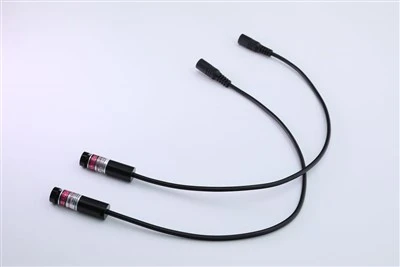
First, let’s get back to basics. A standard bare laser diode emits light in a roughly elliptical beam, spreading out as it travels away from the source. That spread is divergence angle, measured in degrees, right? For a bare 650nm red laser, for example, you might see numbers like 10 degrees along one axis and 20 along the other. But a DOE changes that entire story. A DOE is a tiny, micro-patterned glass or plastic surface that reshapes the laser beam into a specific pattern—think lines for structured light in face ID, grids for 3D mapping, or even custom shapes for industrial alignment. And that reshaping directly impacts divergence.
Here’s where it gets important for anyone sourcing a DOE laser module: divergence is rarely a single value when a DOE is involved. Most modules will specify two key divergence numbers: on-axis (sometimes called “main beam”) and off-axis (or “diffracted order”). Wait, what’s the difference? The on-axis beam is the primary light that travels straight through the DOE, along the module’s central axis. For most common DOEs used in consumer or industrial applications, the on-axis divergence is actually very narrow—often less than 1 degree, sometimes as tight as 0.1 degrees. That’s a huge difference from a bare laser. Why? The DOE is designed to redirect almost all the laser’s energy into the desired pattern, not let it spread randomly. The off-axis divergence, though, refers to the individual beams that make up your pattern. If your DOE creates a 3×3 grid of lines, each line is a separate diffracted beam, and each of those has its own divergence angle. Typically, those off-axis beams have a wider divergence—between 1 and 5 degrees, depending on the design.
I see a lot of customers mix these two up early on. Last quarter, a design engineer from a robotics startup came to me upset, saying his module’s divergence was “too wide” when he tested it. He was measuring the spread of the individual grid lines, not realizing that’s exactly the intended behavior for his structured light application. The on-axis beam was narrow, but each diffracted line was spreading at 3 degrees—perfect for his 2-meter range, but he thought it was a flaw. That’s why clear specification is key when working with a supplier.
What factors actually determine a DOE laser module’s divergence, anyway? It’s not arbitrary. First, there’s the laser itself. The wavelength of the diode matters: a 405nm blue laser will have a slightly tighter inherent divergence than a 980nm infrared diode, all else equal. The size of the laser’s aperture also plays a role—smaller apertures lead to wider divergence, a rule from optical physics that holds even with a DOE. But the biggest variable is the DOE’s design. The pattern you want to create, the spacing between beams, and the amount of light you want in each spot all shape divergence. A DOE for a dense grid of 100 lines will have wider individual beam divergence than a DOE for just 5 lines, because the micro-patterns have to spread the energy more across more diffracted orders.
There’s also a common misconception that “lower divergence is always better.” That’s not true. If you’re building a face recognition system, you want tight, uniform lines to accurately map facial features, so a narrower divergence (0.5 degrees for on-axis, 1 degree for lines) is ideal. But if you’re using a DOE laser for large-area floor marking in a warehouse, you need wider divergence to cover more space without needing to move the module. That’s why our team works closely with each customer to align divergence with their use case. We recently built a module for a construction company that needs to project a 10-meter horizontal line across a jobsite—we specified a 4-degree off-axis divergence for the line, which gave them consistent visibility even at maximum range, without the lines becoming too faint at the edges.
Measurement is another area where people get confused. How do you actually measure a DOE laser’s divergence? You can’t just hold a protractor up to the beam, not accurately enough for engineering work. The standard method is to use a beam profiler: you place a detector at a fixed distance from the module, measure the diameter of the beam (or pattern spots) at that distance, and use the formula θ = 2 * arctan(d / (2*L)), where d is the beam diameter and L is the distance. For our modules, we always measure divergence at a range of 1 meter, 2 meters, and 5 meters to account for how the beam spreads over distance—this is especially important for off-axis beams, which can have slightly different divergence along different axes.
Now, let’s talk about common use cases, because divergence needs change drastically by application. For consumer electronics like smartphone face ID, DOE laser modules usually have on-axis divergence under 0.3 degrees and off-axis beam divergence between 0.8 and 1.5 degrees. These tight angles ensure the structured light pattern is precise enough to match tiny facial features, even at close range. For lidar in autonomous vehicles, the numbers shift a bit: lidar DOEs often have a wider field of view, so off-axis divergence can be 2 to 4 degrees, letting the laser cover a wide area to detect obstacles at long range. Industrial alignment tools, like those used in semiconductor manufacturing, often use ultra-narrow divergence—sometimes less than 0.1 degrees—to align tiny components with micron-level precision.
I’ve also seen customers struggle with divergence when their design requires both a wide pattern and tight beam quality. That’s where custom DOEs come in, which is a big part of what our team does. A standard off-the-shelf DOE might give you a 2-degree divergence, but if you need a unique combination of pattern size and beam spread, we can engineer a custom micro-pattern that balances those needs. For example, last year a medical device maker approached us needing a DOE laser for a dermatology tool that projected a 2cm grid on a patient’s skin. They needed the grid lines to be narrow enough to target specific spots, but not so tight that they faded at the edges. We designed a custom DOE with on-axis divergence of 0.2 degrees and off-axis line divergence of 1.2 degrees, which worked perfectly for their application.
What about edge cases? Can divergence be too wide, or too narrow? Yes, both. If divergence is too wide for your range, the beams will spread out beyond your sensor’s ability to detect them, leading to lost data. If it’s too narrow, you’ll need to place the module very precisely to get a full pattern, which adds cost and complexity to your design. Another edge case is temperature: laser diodes and DOEs can shift slightly with temperature, which can change divergence. That’s why we test all our modules across a range of operating temperatures (-20°C to 60°C, standard for most industrial and consumer use) to make sure divergence stays consistent. We had a customer a couple years ago who tested our module at room temperature and thought the divergence was too wide, but when we tested it at -10°C (the temperature it would operate in their outdoor sensor), the divergence narrowed to exactly what they needed. Temperature stability is a factor that’s easy to overlook, but it’s critical for real-world performance.
As a supplier, our goal isn’t just to sell a laser module—it’s to make sure you get the right divergence for your project. Too often, companies will use a generic divergence number in their spec sheet, but that doesn’t tell the full story. We provide full divergence data for every module we ship, including both on-axis and off-axis angles, measurement range, and temperature stability. We also offer design support to help you choose the right divergence for your application, whether you’re building a small consumer device or a large industrial system.
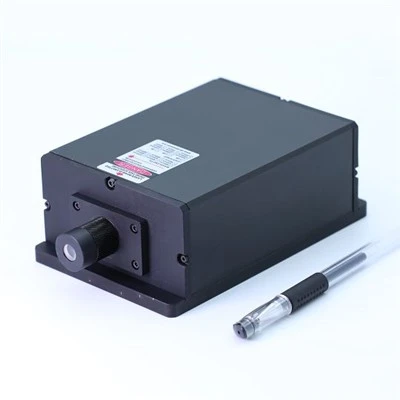
If you’re currently designing a project that uses a DOE laser module, and you’re not sure what divergence angle you need, or you’ve been frustrated by miscommunication with your current supplier about these specs, reach out to our team. We’ve worked with hundreds of engineers across industries to tailor modules to their exact needs, and we can help you navigate the tradeoffs between divergence, beam quality, and pattern shape. Don’t waste time guessing at specs that will make or break your product—let’s talk through your requirements, and we’ll provide a custom solution that fits.
Dot Laser Modules References
- E. G. Loewen, E. Popov, Diffraction Gratings and Applications, CRC Press, 1997.
- R. A. Thompson, Laser Beam Divergence and Propagation, Journal of Optical Engineering, Vol. 30, No. 10, 1991.
- K. Iizuka, Elements of Photonics, Volume 2: For Fiber and Integrated Optics, John Wiley & Sons, 2002.
- Technical Note: DOE Laser Module Specifications, International Society for Optics and Photonics (SPIE), 2018.
Changshu Desheng Optics Electronics Co., Ltd.
As one of the most professional doe laser modules manufacturers and suppliers in China, our products have good reputation in the market. Please feel free to buy advanced doe laser modules for sale here from our factory. Good service and quality products are available.
Address: 8A, Yineng science and technology industrial park, No.183, Yinhe Road, Southeast Development Zone, Changshu, Jiangsu Province, China.
E-mail: desheng1@dershinelaser.com
WebSite: https://www.ds-lasers.com/
