If you’ve ever unboxed a new pair of wired headphones, checked into a hotel room with a shared media port, or wondered why some microphones work seamlessly with your phone while others fizz out mid-call, you’ve probably run into the term “TRRS headphone jack.” As a headphone jack supplier who’s worked with audio engineers, freelance creators, and big-name device manufacturers for over a decade, I’ve seen how confusing this tiny, 3.5mm (or 2.5mm, though 3.5mm is far more common) connector can be for casual users. It’s not just a simple audio port—its internal structure is the reason your podcast mic picks up your voice and your gaming headset syncs your game chat without static. Let’s break it down in plain, practical terms no jargon-obsessed engineer can overcomplicate. Headphone Jacks
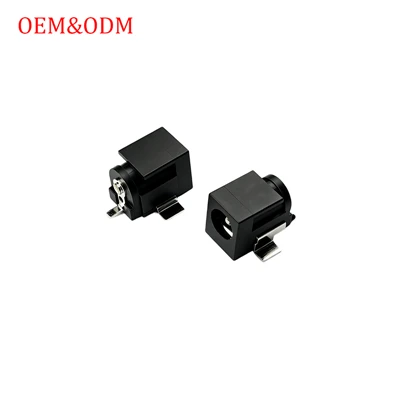
First, let’s start with the basics: “TRRS” is an acronym, and each letter tells you something critical about what the jack does. The first two Ts stand for Tip and Ring, which are the two metal conductive rings stacked along the center of the plug. The R after those stands for Ring, and the final S is for Sleeve. Wait—why two Rings? That’s the secret that makes TRRS different from the older TR (Tip-Ring) or TS (Tip-Sleeve) jacks you might remember. TS jacks, for example, are the basic two-conductor plugs you find on old guitar amps or simple mono headphones: they carry one audio signal (usually left or right) through the Tip and the ground through the Sleeve, and that’s it. TR jacks add a third Ring, which splits the audio into left and right stereo signals—so you get both channels for music, not just a single mono stream.
TRRS jacks add that second Ring, which is where things get useful. That third Ring doesn’t just carry another audio signal—it acts as a dedicated input for a microphone, plus the final Sleeve still handles the all-important ground, the shield that cuts out static and keeps your audio clean. Let’s count the conductors to make it concrete: Tip (1), Ring 1 (2), Ring 2 (3), Sleeve (4) = four total conductive points. That’s why you’ll sometimes hear TRRS referred to as a “4-conductor jack” and TS/TR as “2 or 3-conductor” respectively.
The confusion comes when you mix up TRRS and TR jacks, which are the most common mix-ups for anyone who’s tried to plug a generic headset into a laptop and heard only one side or no mic at all. For example, a standard TR stereo headphone plug has Tip (left audio), Ring (right audio), and Sleeve (ground)—no extra Ring for a mic. A TRRS plug rearranges those to prioritize both audio and mic: most modern devices (smartphones, tablets, gaming consoles) use a standard TRRS pinout where Tip = Left Audio, Ring 1 = Right Audio, Ring 2 = Mic, Sleeve = Ground. But there are other pinouts too, which is why a headset that works on your phone might not work on your old laptop—their internal wiring is tuned for different device standards, a problem we as a jack supplier solve by stocking TRRS jacks tailored to those specific pinouts.
Let’s talk about real-world use cases, because this isn’t just a tech lab term. If you’ve ever used a wired in-ear monitor that doubles as a call mic, that’s a TRRS plug. If you’ve got a gaming headset that lets you switch between listening to in-game audio and chatting with teammates, that’s TRRS. Even the aux port in your car for Bluetooth adapters that add hands-free calling? That’s TRRS too—without that second Ring, your car can’t pick up your voice for calls, only play music. We see this every day as a supplier: when a creator needs a jack for a vlogging mic that also outputs audio to their phone, they need a TRRS, not a TR, to get both functions in one small plug.
You might be wondering why everyone didn’t just stick with TR if it works for stereo. The simple answer is device and feature evolution. Back in the 1980s and 1990s, audio ports were just for music—phones were for calls, so headsets only needed a mic, which was its own separate port. By the 2000s, smartphones merged music and calls into a single port, so manufacturers needed a connector that could carry two audio channels and a mic, all in the same 3.5mm plug. TRRS was the perfect fit: it was small, cheap to mass-produce, and required no major changes to device hardware (most phones already had internal TR jack wiring that could be adjusted to accommodate the extra mic conductor). That’s why TRRS is still the most common audio port on mobile devices today, even as USB-C and Lightning ports take over for wired connections.
Now, let’s clear up a common myth: TRRS isn’t just for 3.5mm jacks. You’ll also find TRRS connectors on 2.5mm ports, used mostly on older flip phones or some compact headsets, but 99% of the TRRS jacks we supply are 3.5mm, since that’s the standard for most consumer and commercial devices. Another myth: TRRS jacks always have four conductors. While that’s the most common configuration, some specialty TRRS jacks have additional conductors for extra features like line-in, video output, or even power for low-power devices like small LED lights on headphones, but those are far less common for everyday use.
As a headphone jack supplier, I’ve seen firsthand how TRRS jacks solve specific pain points that older jacks can’t. For example, a freelance podcaster might use a TRRS jack to connect their lavalier mic to their laptop, so they can monitor their audio while recording. A café owner might stock TRRS-compatible headsets for their staff, so they can take calls without needing a separate phone port. Even gamers rely on TRRS: most console controllers use a TRRS port for headsets, letting players hear game audio and chat through the same plug. That versatility is why demand for TRRS jacks has stayed steady over the years, even as wireless headphones grow in popularity—wired audio still has a place for reliability, no dead batteries, and consistent audio quality.
One thing we always stress to clients who source from us is that not all TRRS jacks are the same. The material quality, shielding, and pinout precision make a huge difference in performance. A cheap TRRS jack with flimsy metal rings might cause audio dropouts or static when plugged in multiple times, while a high-quality TRRS jack with gold-plated conductors and thick insulation will last thousands of plug cycles without degrading audio. That’s why we test every batch of jacks we supply: we check for consistent pin spacing, no loose conductors, and reliable signal transfer, because a bad jack can ruin a whole product line, and we don’t want our clients to face that headache.

If you’ve ever had a moment where your headset mic didn’t work or you only heard one side of audio after plugging into a new device, the issue is almost always a TRRS pinout mismatch. For example, Apple devices use a slightly different TRRS pinout than most Android devices, and many older laptops use a TRS pin instead of TRRS, making TRRS headsets incompatible. We work with clients to supply custom TRRS jacks tailored to their specific device’s pinout, so they don’t have to deal with those compatibility issues. Whether you’re building consumer headphones, industrial audio equipment, or communication devices for frontline workers, a TRRS jack is often the most cost-effective way to combine audio input and output in a single, compact port.
Power Strip Modules At the end of the day, TRRS jacks are a perfect example of how small, simple tech can solve big problems. They turned a basic audio port into a multi-functional connector that works for calls, music, gaming, and content creation. As a supplier who’s been in this space long enough to see the shift from TR to TRRS, I can tell you that TRRS isn’t a passing fad—it’s still the go-to for anyone who needs a reliable, versatile audio port that works for both personal and commercial use. If you’re looking for high-quality TRRS headphone jacks tailored to your project, feel free to reach out to discuss your specific needs.
References
- Consumer Electronics Association. (2021). Audio Connector Standards for Mobile Devices.
- Audio Engineering Society. (2019). 3.5mm Connector Design and Performance Specifications.
- International Electrotechnical Commission. (2020. IEC 60968: Audio Connectors for Consumer Devices.
- Wireless Innovation Forum. (2022. Wired Audio Port Use Cases for Wired and Integrated Devices.
- Headset and Device Manufacturers Association. (2021. Compatibility Standards for TRRS Jacks.
Cixi Yingda Electronics Co., Ltd.
As one of the most professional headphone jacks manufacturers and suppliers in China, our products have good reputation in the market. Please rest assured to wholesale high quality headphone jacks for sale here from our factory.
Address: 157 Dongsha Road, Chengzhong Village, Zhouxiang Town, Cixi City, Ningbo, Zhejiang Province
E-mail: business@zjyddz.com
WebSite: https://www.zjyddz.com/
