As a supplier of LED ceiling lights, I get asked a lot about why some of our products perform differently in various spaces. One question that comes up repeatedly is: “Does ambient light really affect how my LED ceiling light works?” The short answer is yes, and it’s not just a matter of brightness – it’s a combination of how the ambient light interacts with the LED’s design, the human eye’s perception, and even the way the light spreads in a room. I’ve spent years working with installers, designers, and end users to troubleshoot issues, so today I want to break this down in plain, practical terms – no overly technical jargon, just real-world insights from someone who sees this play out every day. LED Ceiling Light
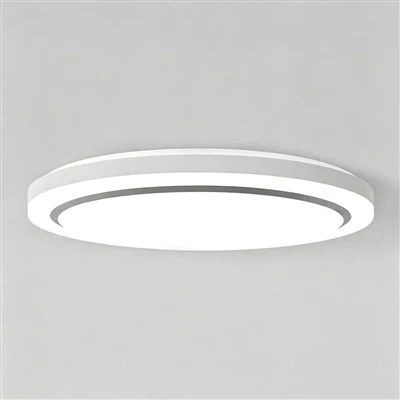
Let’s start with the basics to set the stage. LED ceiling lights are designed to produce a specific amount of light output (measured in lumens) and a certain color temperature (warm white, cool white, etc.). But ambient light – which is any existing light in a space, whether natural (sunlight through windows) or artificial (table lamps, under-cabinet lights, or even old incandescent fixtures) – doesn’t just add extra glow. It changes how we perceive the LED ceiling light’s performance in three key areas: light output perception, color accuracy, and energy efficiency.
First, light output perception. This is what most people notice immediately. If you install our LED ceiling light in a room with lots of natural ambient light – say, a living room with large south-facing windows that get direct sun for half the day – the LED’s brightness can feel dimmer than it actually is. Our products are tested in controlled lab settings where there’s no other light source, so we rate them at, for example, 3000 lumens. But in a bright, sunlit room, your eye has to adapt to the ambient light, making the LED’s output seem lower. This is called “simultaneous brightness contrast” – our eyes judge brightness relative to what’s around it. If you put a 3000 lumen LED next to a 5000 lumen window, the LED will feel dimmer, even though it’s technically producing less light. I’ve had a customer tell me our LED ceiling lights looked “too dark” in their new kitchen, only to find out they had skylights that let in way more natural light than their old space. That’s the ambient light at work, not a flaw in our product.
On the flip side, if you install an LED ceiling light in a space with very low ambient light – like a basement with no windows – the same 3000 lumens will feel much brighter, even harsh, to someone walking in from a dim hallway. Our lights are designed with diffusers to soften the output, but in a dark room with no other light to balance it, that soft glow can feel overwhelming. I always advise customers to consider their space’s ambient light when choosing a lumens rating. For a bright living room with windows, bumping up to 3500 lumens is a safe bet; for a dark bedroom, 2500 lumens will feel just right without overwhelming the space.
Next up: color accuracy. This is a big one, especially for spaces where color matters – like home offices, craft rooms, or retail spaces. LED ceiling lights have a Color Rendering Index (CRI), which measures how accurately they show colors compared to natural sunlight. Our top-tier LED ceiling lights have a CRI of 90 or higher, which means they render colors almost as well as natural light. But ambient light can throw that off. If you have a warm ambient light source – say, a vintage table lamp with a 2700K color temperature – pairing it with a cool white LED (5000K) can create a “color clash” that makes the LED’s colors look off. For example, a white wall might look slightly blue, or a red sweater might look dull. That’s not a problem with the LED itself; it’s how the two light sources mix.
I’ve seen this go wrong more times than I can count. A customer in a clothing store installed our LED ceiling lights (CRI 90, 4000K) alongside old, warm incandescent track lights. When they hung new t-shirts, the blue and purple shades looked muted and wrong, even though the LED was perfectly color-accurate on its own. Once they swapped the track lights for LED warm white ones that matched the ambient, the colors popped exactly as they should. Even natural light can affect this: in a room with north-facing windows (which have a cool, blue tint), a warm white LED ceiling light might look yellowish by comparison, even though its CRI is high. It’s about balance – understanding that ambient light’s color temperature and CRI will interact with your LED’s to create the final look.
The third area is energy efficiency, which is a top priority for almost every customer who buys LED ceiling lights. A common myth is that ambient light doesn’t affect an LED’s energy use – but that’s not entirely true, especially for lights with built-in sensors or dimmers. Many of our modern LED ceiling lights come with motion sensors or ambient light sensors, which automatically adjust the light output based on how bright the room is. If the ambient light is high, the sensor will dim the LED to save energy, which is a great feature – but it can make the LED’s output seem inconsistent. For example, if a room has a cloud pass, the ambient light dims, and the LED brightens; when the sun comes out, it dims again. This doesn’t mean the light is faulty – it’s the sensor working as designed, responding to the ambient light around it.
We’ve also found that in spaces with very low ambient light, some customers leave their LED ceiling lights on at a lower setting for longer, because the bright output doesn’t feel necessary. This leads to lower overall energy use, which is a win – but it’s important to calibrate the sensor correctly. I always walk customers through how to adjust the ambient light sensitivity on our LED ceiling lights, so the sensor doesn’t react too much to small changes, like a cloud passing or a neighbor’s light shining through a window. Too sensitive, and the light will flicker; not sensitive enough, and it wastes energy. It’s a balance that depends entirely on the space’s ambient conditions.
Now, let’s talk about practical solutions, since I know you don’t just want to hear about the problem – you want to fix it. As a LED ceiling light supplier, we’ve developed a few best practices for working with ambient light, based on what our customers have learned over the years. First, always measure your space’s ambient light before choosing your LED ceiling light. You can do this with a cheap light meter, or even a smartphone app – just check how many lumens of ambient light are present during the brightest part of the day. For a space that gets 1000 lumens of natural light, our 3000 lumen LED will feel balanced; for a space that gets 2000 lumens, go for 3500.
Second, match your LED’s color temperature and CRI to the ambient light in the space. If you have warm ambient light (like a living room with a fireplace), choose a 2700K or 3000K LED ceiling light. If you have cool ambient light (like a home office with north-facing windows), go for 4000K or 5000K. And if color accuracy is key, make sure both the ambient light and your LED have a CRI of 85 or higher – this ensures colors look consistent across all light sources.
Third, adjust the sensor settings on your LED ceiling lights if they have them. Most of our models have a simple dial or app to adjust ambient sensitivity. In a space with stable ambient light (like a basement with no windows), set the sensitivity to low, so the light doesn’t dim unnecessarily. In a space with changing ambient light (like a kitchen with windows), set it to medium, so it responds but doesn’t flicker.
I’ll wrap this up with a story that stuck with me, because it’s a perfect example of how understanding ambient light can make all the difference. A customer came to us a few years ago, frustrated: he’d installed 12 of our top LED ceiling lights in his new home, but he thought they were too dim in his living room and too bright in his bedroom. He tried adjusting the lights, swapping bulbs, even installing extra fixtures, but nothing worked. When I visited his home, I noticed his living room had large west-facing windows, so in the evening, the sun was setting right in those windows, creating a lot of bright ambient light. His bedroom, on the other hand, had no windows, so it was pitch black when the lights were off.
We adjusted the living room lights to 3500 lumens (matching the bright ambient light from the windows) and set the bedroom lights to 2500 lumens (calibrating the sensor to not over-brighten the dark space). Within a week, he emailed us saying the lights felt perfect – no more dim glare in the living room, no more harsh brightness in the bedroom. It wasn’t that the lights were bad; it was that he didn’t account for how ambient light was interacting with them.
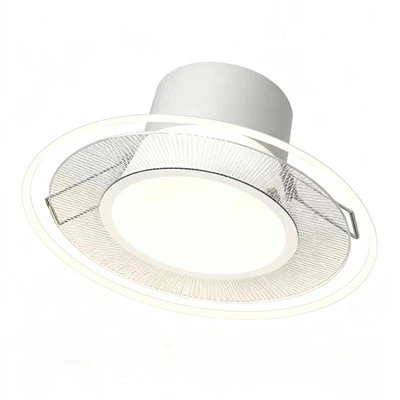
If you’re in the market for a new LED ceiling light, or you’re looking to upgrade your current fixtures, understanding how ambient light affects performance will help you make the right choice for your space. Our team is here to help you every step of the way – whether you’re designing a new home, renovating a commercial space, or just looking to upgrade your lighting. Don’t hesitate to reach out to us to discuss your needs, and we’ll help you find the perfect LED ceiling light that works with your space’s ambient light, not against it.
LED Batten Light References
- International Commission on Illumination (CIE). (2018). Lighting and the Human Eye: A Review. CIE Publication 190:2018.
- IEEE Transactions on Industrial Electronics. (2020). Effect of Ambient Light on LED Lighting System Performance and Energy Efficiency. Vol. 67, No. 12, pp. 10234–10243.
- American National Standards Institute (ANSI). (2019). Performance Standard for Luminaires – LED Ceiling Lights. ANSI/IESNA RP-28-19.
- Lighting Research Center (LRC). (2021). The Impact of Simultaneous Brightness Contrast on Perceived Lighting Quality. Rensselaer Polytechnic Institute.
- Energy Star. (2022). LED Lighting: How Ambient Light Sensors Improve Energy Efficiency. U.S. Environmental Protection Agency.
Debesen (Shanghai) Optoelectronics Technology Co., Ltd.
We are one of the most professional led ceiling light manufacturers and suppliers in China, featured by quality products and good service. Please rest assured to wholesale advanced led ceiling light in stock here and get quotation from our factory. We also accept customized orders.
Address: No.258 Xiucheng Road, Fengcheng Town Economic Development Zone, Fengxian District, Shanghai
E-mail: Debesen258wendy@163.com
WebSite: https://www.debesen.com/
